

The weather in London in March averages a daytime high of 11.7°C and an overnight low of 4.1°C, with 38.8mm of rain and 120 hours of sunshine — and that rainfall figure makes March the driest month of the London year, drier than any month of summer. It is also the month the light changes most decisively: daylight runs from 10 hours 52 minutes on the 1st to 12 hours 51 minutes on the 31st, and British Summer Time begins on Sunday 28 March 2027, pushing sunset from 18:24 on the Saturday to 19:28 on the Monday. Easter Sunday also falls on 28 March in 2027, so that single weekend carries both the clock change and the Easter holiday. Frost drops to about three nights, blossom appears in the Royal Parks, and the city moves outdoors again. All climate figures come from the Met Office record for the Heathrow station, 1991–2020.
Weather in London in March at a Glance
| Average daily high | Average daily low | Rainfall | Sunshine | Nights of air frost | Daylight on 1 / 31 Mar |
|---|---|---|---|---|---|
| 11.7°C | 4.1°C | 38.8 mm | 120 hours | 3.0 | 10h 52m / 12h 51m |
The 38.8mm is the number worth remembering. Most visitors assume London gets drier as it warms, and the opposite is true: March is the driest month in the record and August, in the middle of summer, is wetter than it at 53.6mm. If avoiding rain is your priority, March beats every summer month.
Is March Cold in London?
March is cool rather than cold: 11.7°C by day and 4.1°C at night, with only about three nights of air frost. Recent years have run warmer, at 12.8°C across 2021–2025, and March 2025 averaged 14.1°C by day — closer to a normal April.
The month’s character is its variability. A March week in London can deliver 17°C and blue sky or 6°C with sleet, sometimes in the same week, because the jet stream is still deciding what season it is. The reliable pattern is a cold start and a mild finish: the first ten days often still feel like February, and the last ten regularly reach the mid-teens.
Is March Really the Driest Month in London?
Yes — 38.8mm makes March the driest of all twelve months at the Heathrow station, ahead of February at 45.0mm and April at 42.3mm. For comparison, November records 66.6mm and August 53.6mm.
Recent Marches have been a little wetter than the long-run figure, averaging 47.6mm across 2021–2025, but the spread is again enormous: March 2025 recorded just 4.4mm at Heathrow, an almost completely dry month, while March 2023 recorded 92.4mm. What has not changed is the sunshine: 120 hours, over half as much again as February and more than double December, at just under four hours a day.
When Do the Clocks Change in March?
British Summer Time begins on Sunday 28 March 2027, when the clocks go forward one hour. On Saturday 27 March the sun sets at 18:24; on Monday 29 March it sets at 19:28. You lose an hour of sleep and gain an hour of evening, and for a visitor that is the single biggest improvement in the London year.
Across the month, daylight grows from 10 hours 52 minutes on 1 March (06:48 to 17:40) to 12 hours 51 minutes on the 31st (06:40 to 19:31) — almost two hours added. If your dates straddle the last weekend of March, put the outdoor half of the trip after the change, not before it.
What to Wear in London in March
Dress for 12°C afternoons, 4°C nights and wind, and pack for both halves of the month. March is the hardest month in London to pack for, because a mild spell and a cold snap are equally likely.
- A mid-weight waterproof jacket rather than a winter coat — wind matters more than temperature.
- A jumper or fleece as the adjustable warm layer.
- A scarf, the most useful single item in March.
- Comfortable water-resistant shoes — the ground in the parks stays soft after winter.
- Sunglasses — the March sun is low, bright and often directly in your eyes.
- Gloves for the first fortnight only; by the last week you will not need them.
What Is On in London in March
March is the month London goes back outdoors. The St Patrick’s Day parade and festival run on the Sunday nearest 17 March, with a procession through the centre to Trafalgar Square and a free stage programme. The Boat Race between Oxford and Cambridge is rowed on the Championship Course from Putney to Mortlake in late March or early April (Sunday 11 April in 2027), and it is one of the best free events in the city — the towpath is packed but the race is genuinely spectacular from the riverside pubs. To see the colleges behind the light blue crew, take a Cambridge day trip from London.
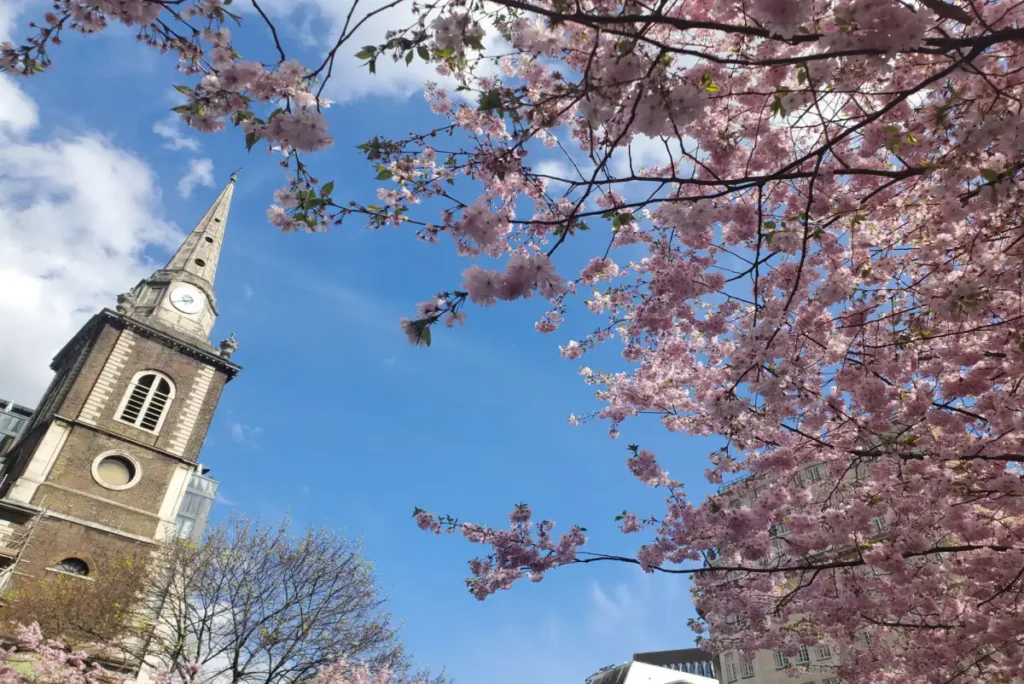
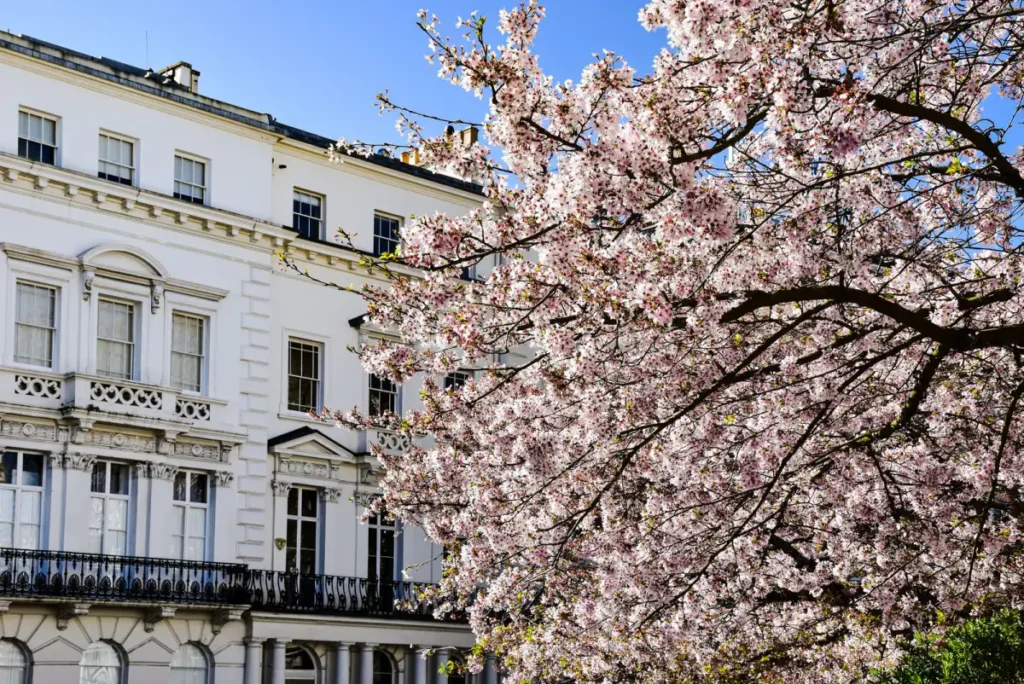
Blossom season starts in the second half of the month, with magnolias and early cherry in the Royal Parks, Kew Gardens and the squares of Kensington and Bloomsbury. Our Hampton Court Palace and Kew Gardens half-day pairs the blossom with Henry VIII’s palace. In 2027, Easter Sunday falls on 28 March, which puts the Easter school holidays and the clock change on the same weekend — expect the busiest travel days of the spring and higher hotel rates from about 26 March.
Is March a Good Time to Visit London?
March is the most underrated month in the London calendar. It is the driest month of the year, it has half as much sunshine again as February, the parks come back to life, and outside the Easter weekend the prices are still closer to winter than to summer.
Against February, March gains nearly three degrees, half again as much sunshine and two hours of daylight. Against April, it is three degrees cooler and has less light, but it is drier on the long-run figures and far quieter, because April carries both Easter and the start of the tourist season. The one caveat is variability: March can hand you a genuinely cold week, so it suits travellers who can move plans indoors at short notice.
London Weather in March: Early Month vs Late Month
Early March is late winter; the last week is unmistakably spring. The first ten days average nearer 9–10°C with the occasional frost, bare trees and a 17:45 sunset. The last week averages 13–14°C, carries the blossom, and — after the clocks change — stays light until half past seven.
For the best of the month, target 20 to 27 March: the blossom has started, the weather has usually turned, and you are ahead of both the clock-change weekend and the Easter crowds.
Getting Around London in March
March transport is easy until the last weekend, then briefly difficult. The combination of the Easter holidays and the clock change in 2027 makes 26–29 March the busiest travel window of the spring, with heavy engineering works on the rail network over the Easter weekend — Network Rail traditionally uses the bank holidays for major closures.
Outside that window, March is one of the most comfortable months to move around the city: no summer heat, no winter storms, and enough daylight for a full day out. If you are arriving over the Easter weekend, when rail replacement services are at their most likely, a pre-arranged London airport transfer is the reliable option, and our Heathrow transfer to your hotel runs regardless of what the trains are doing.

March is also when day trips become properly worthwhile again: Windsor, Oxford, Bath and the Cotswolds all look better with blossom than with bare trees, and after the clock change you have a usable evening on the way home. A chauffeur-driven car in London makes a two-stop day realistic, with a private tour guide in London if you want the history along the way.
Frequently Asked Questions
How warm is London in March?
March averages 11.7°C by day and 4.1°C at night, with about three nights of air frost. Recent years have been warmer, at 12.8°C across 2021–2025 and 14.1°C in March 2025.
Is March the driest month in London?
Yes. At 38.8mm it is the driest of all twelve months in the Heathrow record — drier than any summer month, including August at 53.6mm.
When do the clocks go forward in London in 2027?
On Sunday 28 March 2027. Sunset moves from 18:24 on the Saturday to 19:28 on the Monday, adding an hour to every evening for the rest of the spring and summer.
When does blossom start in London?
Magnolia and early cherry appear in the second half of March in the Royal Parks, Kew Gardens and the Kensington and Bloomsbury squares. Peak blossom is usually the first half of April.
What should I pack for London in March?
A mid-weight waterproof jacket, a warm layer you can remove, a scarf, water-resistant shoes and sunglasses. Pack for two different weeks, because early and late March rarely feel like the same month.
Planning a March Trip
March is the best-kept secret of the London calendar: the driest month of the year, half as much sunshine again as February, blossom in the parks and near-winter prices until Easter. Book before the last weekend if you want quiet, after it if you want the long evenings, and keep one indoor option per day for the cold snap that March still owes you. Check availability and prices for a transfer or a day out with a chauffeur.
Sources
Temperature, rainfall, sunshine and air-frost figures are 1991–2020 averages calculated from the Met Office Heathrow station record, which also supplies the individual recent years quoted. British Summer Time dates follow the UK government clock change calendar. Sunrise and sunset times are calculated for central London.