
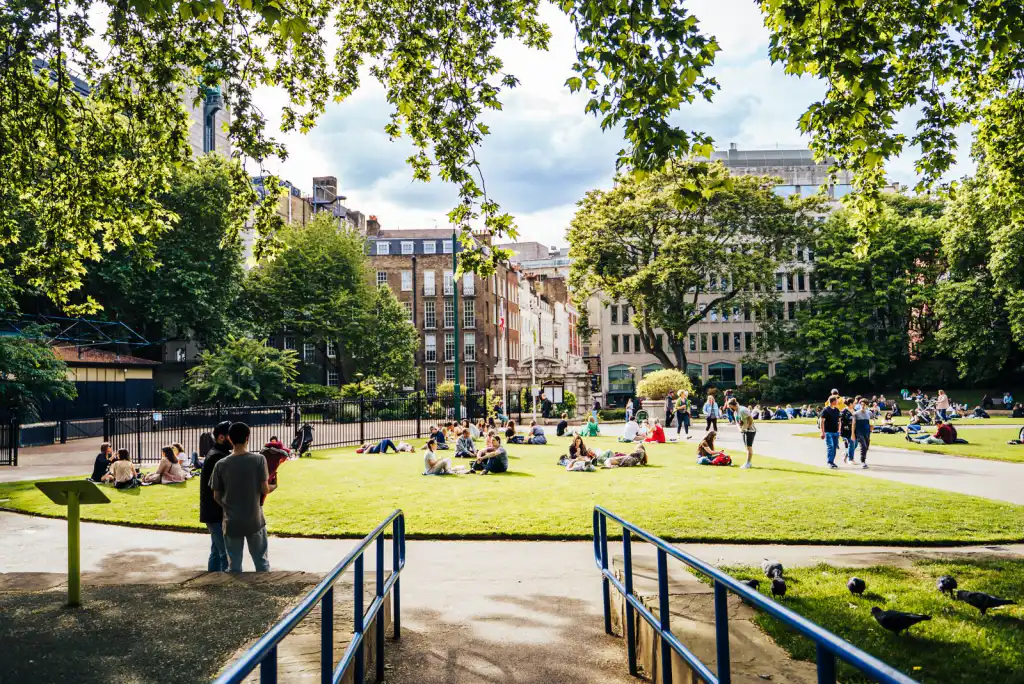
The weather in London in August averages a daytime high of 23.4°C and an overnight low of 14.1°C, with 53.6mm of rain and 192 hours of sunshine across the month — about six hours of sun a day. It is the second-warmest month of the year and the wettest of the British summer.
Pack for warm days and cool evenings — a light layer and a compact umbrella cover almost every August. Two things shape an August trip more than the weather does: Notting Hill Carnival on Sunday 29 and Monday 30 August 2027, and the fact that this is peak season, with the year’s highest hotel rates and the longest queues at every major attraction. Everything below is built on the Met Office record for the Heathrow station, 1991–2020, so the numbers are what the city actually does rather than what a forecast guesses.
Weather in London in August at a Glance
| Average daily high | Average daily low | Rainfall | Sunshine | Daylight on 1 Aug | Daylight on 31 Aug |
|---|---|---|---|---|---|
| 23.4°C | 14.1°C | 53.6 mm | 192 hours | 15h 26m | 13h 40m |
Read that table as a planning tool rather than a forecast. The 23.4°C high is an afternoon figure; mornings usually start between 16 and 18°C, and by 22:00 you are back down towards the mid-teens. The 53.6mm of rain is not spread evenly — August rain in London arrives as short, heavy showers and the occasional thunderstorm, so a wet day rarely means a lost day.
Is London Hot in August?
London in August is warm rather than hot by Mediterranean or Gulf standards, averaging 23.4°C in the afternoon. July is technically the warmest month at 23.9°C, but half a degree is a rounding error in practice — July and August feel the same. What has changed is the recent trend: across 2021–2025 the average August daily high at Heathrow was 24.3°C, a full degree above the 30-year average, and August 2022 averaged 27.0°C; provisional Met Office figures put August 2026 higher still, at 27.5°C.
Spells above 30°C do happen, usually for two to four days at a time when hot air pushes up from the continent. They break quickly, almost always with thunderstorms. The more useful warning is that London handles heat badly: the city is built to hold warmth in, most hotels and older buildings have no air conditioning, and the deep Tube lines can sit above 30°C in the afternoon. A 26°C day in London is more tiring than a 33°C day somewhere designed for it.
Does It Rain a Lot in London in August?
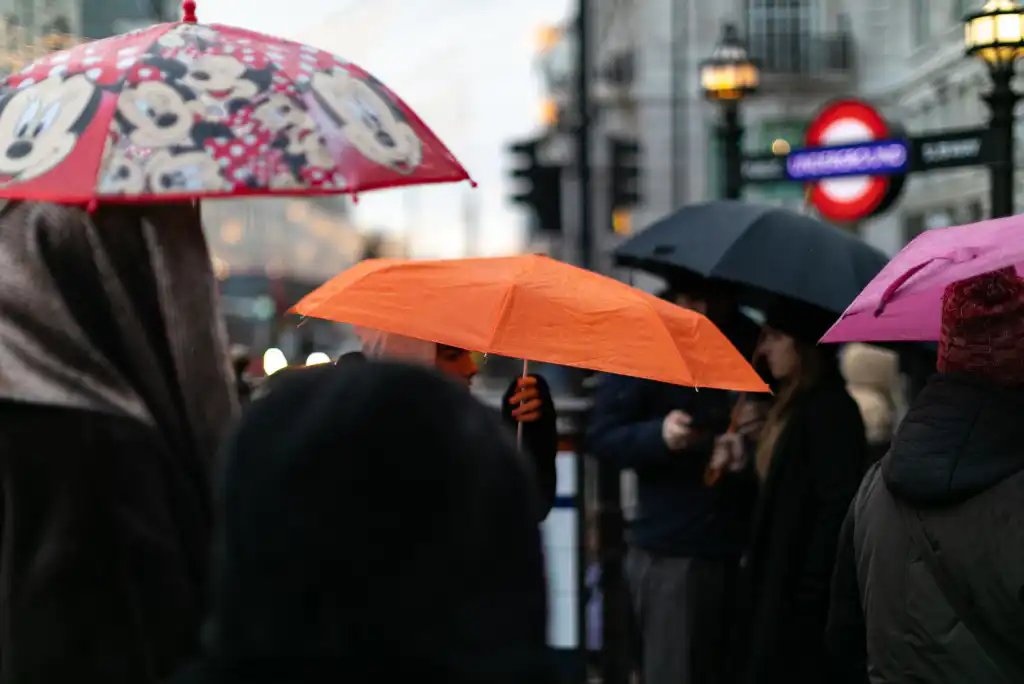
August is the wettest month of the British summer, with 53.6mm of rain against July’s 45.8mm and June’s 47.3mm. That surprises most visitors, who assume the summer dries out as it goes. It does not: warm, humid air in late summer produces heavier convective showers than the steadier rain of spring.
The practical difference matters more than the total. August rain in London usually falls hard for twenty minutes and then stops, rather than settling in for the day. The right response to a shower is a coffee, not a cancelled plan. Recent years have also been drier than the long-run average — the 2021–2025 Augusts averaged 40.2mm — though a single thunderstorm can deliver a third of a month’s rain in an afternoon, so averages hide a lot.
How Long Are the Days in London in August?
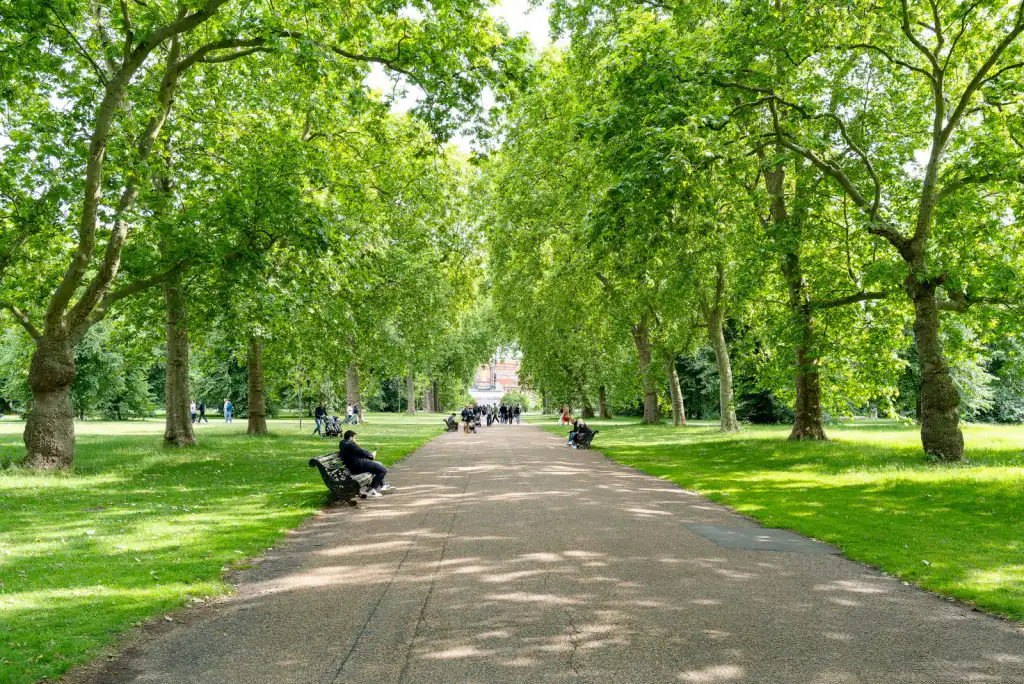
August starts with 15 hours 26 minutes of daylight and ends with 13 hours 40 minutes — you lose nearly two hours of light across the month. On 1 August the sun rises at 05:24 and sets at 20:50; by the 15th it is 05:46 to 20:25; by the 31st, 06:12 to 19:52.
That has a direct effect on how you plan. In the first two weeks you can still do a full day of sightseeing and then walk along the South Bank in daylight after dinner. From about the 25th, sunset slips before 20:00 and the evenings shorten noticeably. If a river trip, a park picnic or a rooftop view is on your list, do it in the first half of the month. With 192 hours of sunshine over 31 days, August also delivers just over six hours of sun on an average day — behind only May, June and July.
What to Wear in London in August
Dress for 23°C days and 14°C nights in the same outfit: light clothing plus one warm layer you can carry. The gap between afternoon and late evening is close to ten degrees, and it catches out visitors arriving from hotter climates who assume “summer” means summer everywhere.
- A light jacket or jumper — essential after sunset and in air-conditioned restaurants.
- Comfortable walking shoes — a normal sightseeing day in London runs to 15,000 steps or more.
- A compact umbrella rather than a heavy raincoat — August showers are warm and brief.
- Sunglasses and sun cream — UV levels are moderate to high on clear August days, and the long afternoons add up.
- Layers you can remove — you will move between 20°C streets and 30°C Tube carriages several times a day.
- A refillable water bottle — London has free public fountains across the centre and every restaurant will refill it.
Dress codes are relaxed almost everywhere, but a few restaurants, private members’ clubs and the smarter West End theatres still expect something better than shorts. One shirt or dress in the case covers it.
Notting Hill Carnival and What Else Is On in August
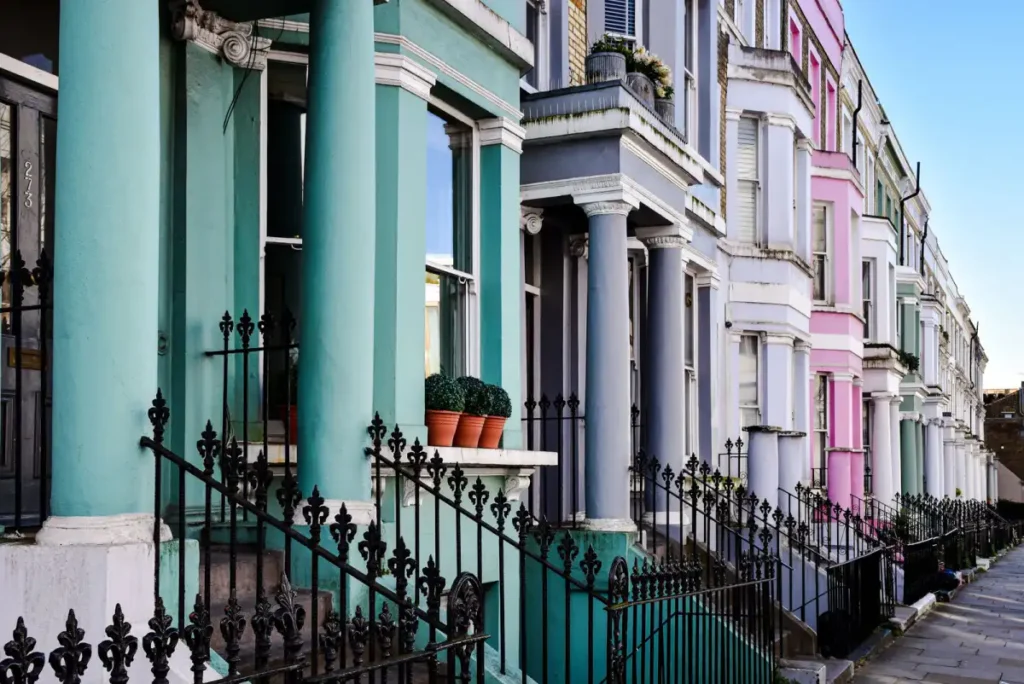
Notting Hill Carnival takes place on Sunday 29 and Monday 30 August 2027, with the Panorama steel band competition on Saturday 28. It is the largest street festival in Europe, drawing crowds of around a million people to a small area of west London, and it is the single biggest thing on the city’s August calendar.
If you are in London that weekend, plan around it whether or not you attend. Roads across W10 and W11 close for two full days, several Tube stations run exit-only or shut entirely, and buses are diverted across a wide area. Driving anywhere near Ladbroke Grove or Westbourne Park is not an option, and taxi and ride-hailing pickups have to be arranged well outside the closure zone. Sunday is the family day; Monday is the main parade and by far the busiest.
The rest of the month is unusually full. The BBC Proms run at the Royal Albert Hall right through August, open-air theatre continues in Regent’s Park, the lidos at Hampstead and Brockwell are at their best, and most major attractions extend their summer opening hours. Outdoor cinema screenings appear in parks and rooftops across the city, and the long evenings make them work in a way they simply do not in October.
Is August a Good Time to Visit London?
August is the best month for weather and events, and the worst for crowds and prices. School holidays run across most of the UK and most of Europe at the same time, which pushes hotel rates to their annual peak and puts an hour on the queue at the Tower of London, the London Eye and Westminster Abbey. With children off school, a chauffeured theme park day at Legoland or Thorpe Park is an easy alternative.
The honest comparison is with the month either side. July is marginally warmer and slightly drier but just as busy. September averages 20.2°C with 49.6mm of rain — a few degrees cooler, noticeably quieter, and materially cheaper once the schools go back. If your dates are fixed by the school calendar, August is the right answer and the events calendar rewards you for it. If your dates are genuinely flexible and you care more about calm than carnival, the first three weeks of September give you most of the weather for a fraction of the crowd.
Book anything with a timed ticket before you arrive, start your days early — the difference between arriving at a major attraction at 09:00 and at 11:00 in August is often an hour of queueing — and keep one indoor option in reserve for each day in case a shower lands at the wrong moment.
On the hottest days many visitors leave the city for the coast: a Brighton and Seven Sisters day trip from London by private car reaches the seafront in about two hours and skips the packed August trains.
London Weather in August: Early Month vs Late Month
The first half of August gives you the longest days and the warmest weather; the last week gives you the Carnival and the busiest transport of the year. Temperatures barely move across the month, but the light does, and the last bank holiday weekend changes the character of the city entirely.
One local pattern is worth knowing: a large number of Londoners leave the city in August. You can do the same with a two-day Snowdonia tour from London, with lakes and mountain views in North Wales. The result is that the financial district and the residential neighbourhoods feel quiet on weekdays while the tourist core — Westminster, Covent Garden, South Kensington — is at its fullest. Restaurants that are impossible to book in June often have tables in mid-August, and the reverse is true of anything within walking distance of a landmark.
Getting Around London in August
Heat and crowds, not rain, are the transport problem in August. The deep Tube lines — Central, Bakerloo, Northern, Piccadilly — have no air conditioning, and carriage temperatures regularly pass 30°C on warm afternoons. The Elizabeth line, the District and Circle lines and every London bus are air conditioned, so a slightly longer route is often the more comfortable one.
Airport arrivals are the other pressure point. August is the peak month at Heathrow and Gatwick, immigration halls are at their fullest (a Heathrow Meet & Assist greeter can meet you at the aircraft door and walk you through them), and the walk from the terminal to a train with luggage in 25°C heat is nobody’s idea of a holiday. A pre-arranged London airport transfer removes that part of the day entirely — the driver tracks the flight, waits through any delay, and takes you door to door. For arrivals into the busiest terminal in the country, our Heathrow transfer to your hotel is a fixed price per car, not per passenger.

For days out beyond the centre — Windsor, Oxford, Bath, Stonehenge — August traffic makes an early start worth more than usual, and a chauffeur-driven car in London lets you fit two or three stops into a day that public transport would stretch across two. If you would rather have the history explained as you go, a private tour guide in London can be arranged alongside the car.
Frequently Asked Questions
How hot does London get in August?
The average August afternoon reaches 23.4°C, and the average night falls to 14.1°C. Short spells above 30°C occur most years, usually lasting two to four days before a thunderstorm breaks them. August 2022 averaged 27.0°C by day across the whole month, and provisional figures put August 2026 at 27.5°C.
Does it rain every day in London in August?
No. August brings 53.6mm of rain in total, which arrives as short heavy showers rather than continuous drizzle. Most days see no measurable rain at all, and the ones that do are usually dry again within the hour.
Is August or September better for visiting London?
August is better for weather, daylight and events; September is better for price, crowds and comfort. August averages 23.4°C against September’s 20.2°C, but hotel rates and queues drop sharply once the UK schools return in the first week of September.
Do I need a jacket in London in August?
Yes, a light one. Nights average 14.1°C and outdoor evenings by the river are cooler still. A jumper or light jacket you can carry during the day is the single most useful thing in an August case.
What is the busiest weekend in London in August?
The bank holiday weekend of 28–30 August 2027, when Notting Hill Carnival takes over west London. Expect road closures across W10 and W11, exit-only or closed Tube stations, and diverted buses across a wide area for two full days.
Is the London Underground air conditioned in August?
Only partly. The Elizabeth line and the sub-surface lines — District, Circle, Hammersmith & City, Metropolitan — have air-conditioned trains. The deep tube lines do not, and they routinely exceed 30°C on warm afternoons. Buses are air conditioned throughout.
Planning an August Trip
August rewards preparation more than any other month in London. The weather is as good as it gets, the light lasts into the evening and the events calendar is full — but every other visitor has worked that out too. Book timed tickets ahead, keep the Carnival weekend in mind when you plan movement across the city, and arrange your airport transfers before you fly. Check availability and prices for a chauffeur or airport transfer, and we will handle the part of the trip that queues are worst for.
Sources
Temperature, rainfall and sunshine figures are 1991–2020 averages calculated from the Met Office Heathrow station record. Carnival dates are confirmed by Notting Hill Carnival. Sunrise and sunset times are calculated for central London in British Summer Time.
Looking further ahead than one month? London weather month by month compares all twelve months in one place.