
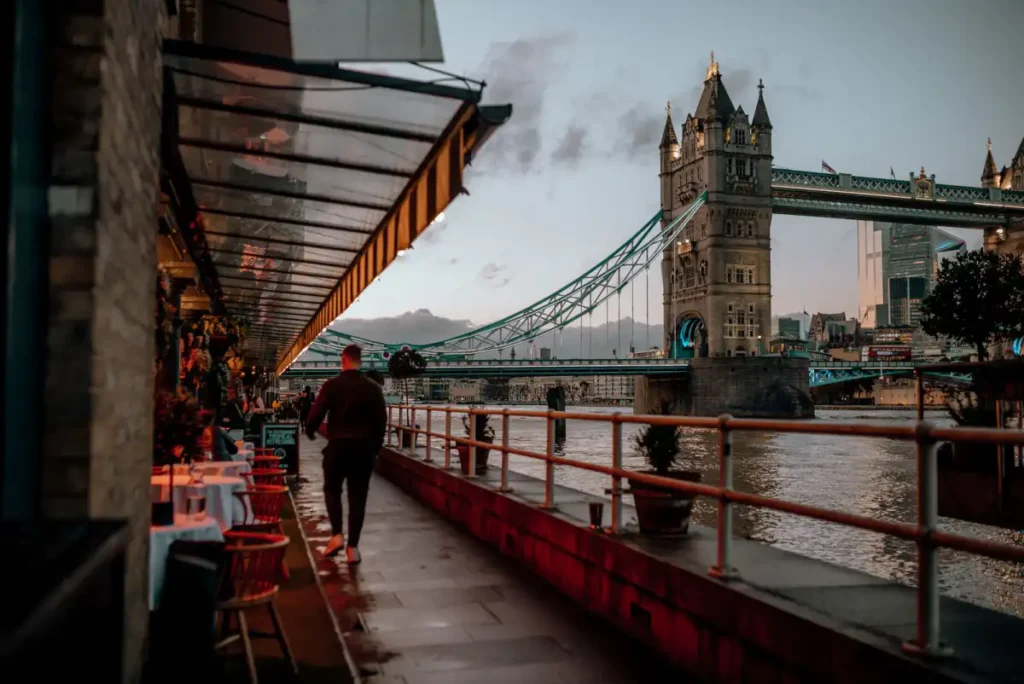
The weather in London in September averages a daytime high of 20.2°C and an overnight low of 11.6°C, with 49.6mm of rain and 150 hours of sunshine — close to five hours of sun a day. It is the fourth-warmest month of the year and the best compromise: summer temperatures without August prices.
Daylight is still long, though nearly two hours of it are gone by the end of the month. One honest warning the long-run averages hide: recent Septembers have been markedly wetter than the 30-year figure, averaging 72.3mm across 2021–2025, with 114.8mm in September 2024. Pack a proper jacket, not just a jumper. All the climate figures here come from the Met Office record for the Heathrow station, 1991–2020.
Weather in London in September at a Glance
| Average daily high | Average daily low | Rainfall | Sunshine | Daylight on 1 Sep | Daylight on 30 Sep |
|---|---|---|---|---|---|
| 20.2°C | 11.6°C | 49.6 mm | 150 hours | 13h 36m | 11h 43m |
September is a month of two halves in a way that no other month in London is. The first fortnight behaves like a calmer August; the last week behaves like early autumn. Averaging the whole month gives you a number that describes neither half well, which is why the section on early and late September below matters more here than in most guides.
Is London Still Warm in September?
Yes — September averages 20.2°C by day, only three degrees below August, and recent years have run warmer still. Across 2021–2025 the average September daily high at Heathrow was 21.5°C, and September 2023 averaged 24.4°C, which is warmer than a normal August. The old assumption that summer ends on 1 September has not held for a decade.
Nights are where the season actually turns. The average low of 11.6°C is about two and a half degrees down on August, and by the last week of the month it is common to wake to single figures. The practical consequence is that a September day can genuinely need two different outfits: shirtsleeves at two in the afternoon, a jacket by eight in the evening.
Does It Rain a Lot in London in September?
The 30-year average is 49.6mm, which is less than August — but the recent record is much wetter, averaging 72.3mm across 2021–2025. That gap is the single most useful thing to know about a September trip, and most weather guides will not tell you because they quote the long-run average alone.
The individual years show how wide the spread is: 20.0mm in 2020 and 48.8mm in 2025 against 86.0mm in 2022 and 114.8mm in 2024. In other words, September can hand you a dry, golden fortnight or a genuinely wet one, and no average will tell you which in advance. The sensible response is not to avoid September — it is to build one indoor option into each day and to bring a jacket that actually keeps rain out.
How Long Are the Days in London in September?
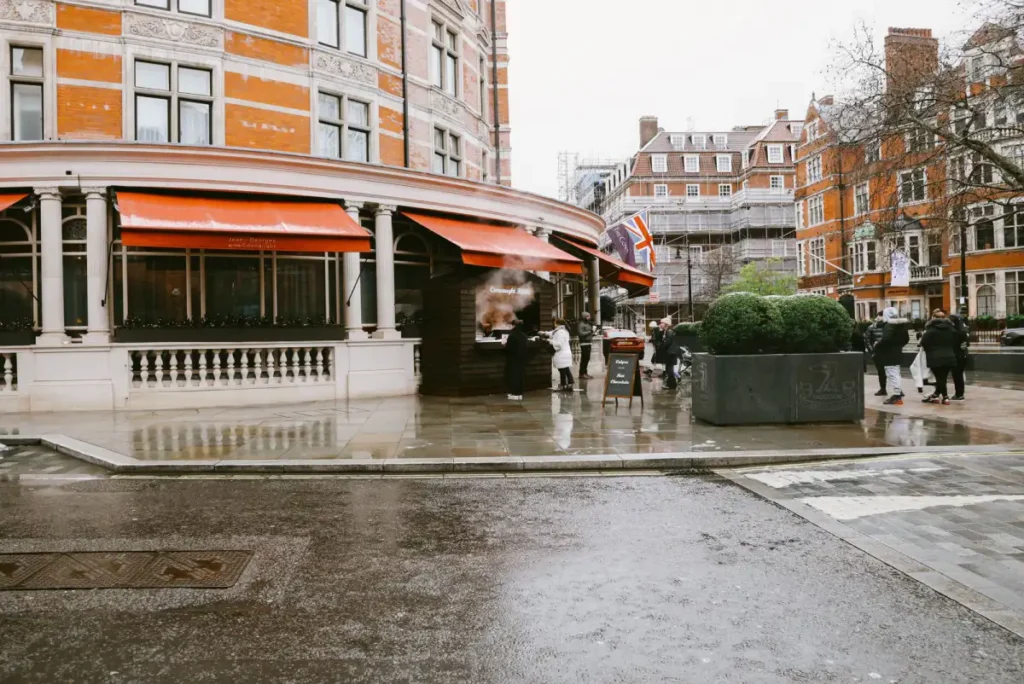
September starts with 13 hours 36 minutes of daylight and ends with 11 hours 43 minutes. On 1 September the sun rises at 06:13 and sets at 19:49; by the 30th it is 07:00 to 18:43. Almost two hours of light disappear across the month, about as much as in October.
That has a real effect on itineraries. In the first week you can finish a day at the Tower of London and still walk the South Bank in daylight. By the last week the light is gone before you have finished dinner. If you have one outdoor thing you care about — a river trip, a rooftop view, a walk in Richmond Park — do it in the first half of the month, and let the second half belong to museums, galleries and theatre. Our 4 days in London private tour plans each day around that light and those indoor highlights.
What to Wear in London in September
Dress for a 20°C afternoon and an 11°C evening, and make the outer layer waterproof rather than warm. The temperature swing across a September day is wider than in any later month of the year.
- A light waterproof jacket — this is the month where a rain-resistant layer earns its place in the case.
- A jumper or cardigan for evenings, especially in the last ten days.
- Comfortable, closed walking shoes — wet pavements and open sandals are a poor combination.
- A scarf, which weighs nothing and covers the gap between a warm afternoon and a cool river breeze.
- A compact umbrella, still worth carrying every day.
- Sunglasses — the low September sun is genuinely awkward when driving or walking west in the late afternoon.
What Is On in London in September
September is one of the strongest cultural months of the London year, led by the Open House Festival in mid-September. In 2026 it was held from 12 to 20 September. Several hundred normally closed buildings across all 33 boroughs opened their doors free of charge, from private houses to engineering works. The 2027 dates are announced by Open City in spring. It is the single best reason to be in London in September, and popular buildings ballot their tickets weeks in advance.
Around it: the BBC Proms finish with the Last Night in the opening fortnight, Totally Thames runs river events for the whole of September, London Fashion Week takes over parts of the centre in the third week, and the theatre season restarts in earnest after the summer. The parks are still open late enough for outdoor events in the first fortnight, and the big museums begin their autumn exhibitions. Out of town, the Goodwood Revival fills West Sussex with classic cars, and a private driver to Goodwood waits on site all day.
Is September a Good Time to Visit London?
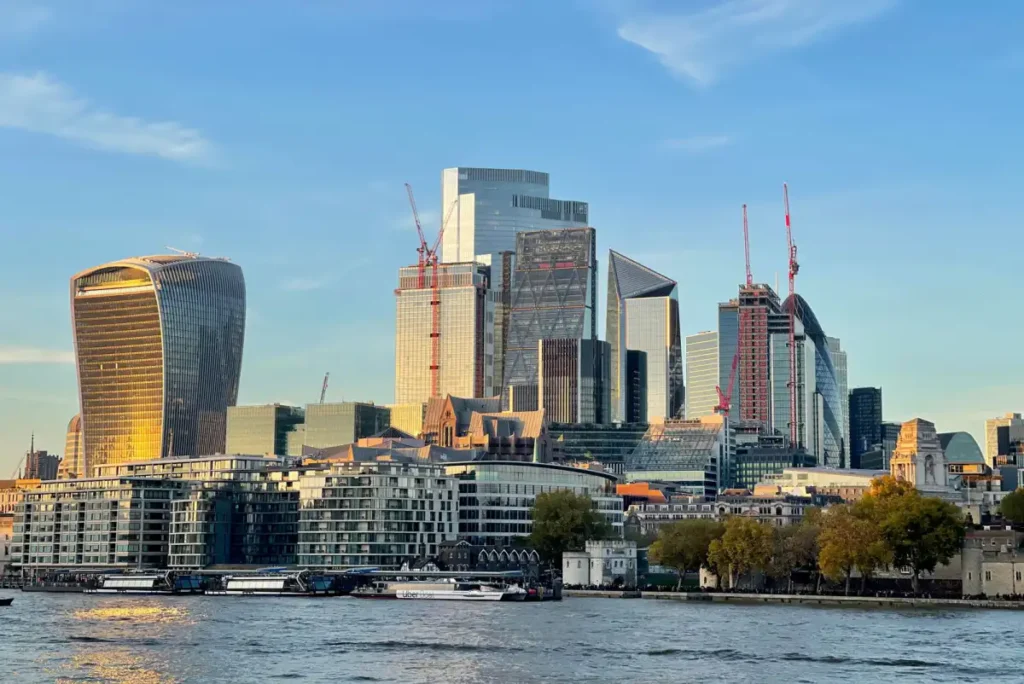
September is the best value month of the London year for anyone whose dates are not fixed by school holidays. UK schools return in the first week, European ones shortly after, and the effect on the city is immediate: hotel rates fall, queues shorten, and restaurants that were impossible in August take bookings again. Quieter weeks also suit a day trip to Bibury and the Cotswolds.
Compared with August, you give up three degrees of warmth and nearly two hours of evening light, and you take on a higher chance of rain than the long-run average suggests. What you get back is a city that functions normally. Compared with October, September is four degrees warmer, meaningfully drier on the 30-year figures, and has an extra two hours of daylight. For a first visit to London, the first three weeks of September are as good a window as the year offers.
London Weather in September: Early Month vs Late Month
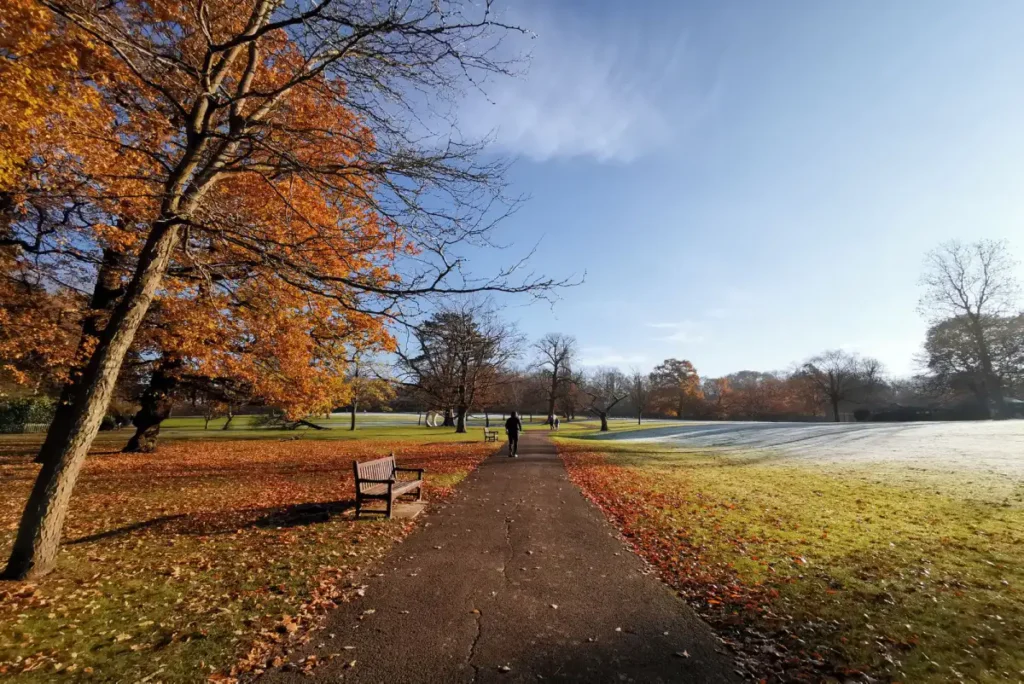
The first two weeks are an extension of summer; from about the 20th the month turns. Early September regularly delivers 23–24°C afternoons, outdoor tables stay busy and the parks still fill on a warm evening. From the third week, highs settle nearer 17–18°C, mornings turn cool, and the first proper autumn colour appears in the Royal Parks. Those clear, cooler late-September days suit a longer outing, such as our private Stonehenge and Bath day trip from London.
If warmth is the priority, book the first half. If you want autumn light, thinner crowds and lower prices, take the last week — it is one of the quietest windows in the whole year, sitting after the summer rush and before the half-term and Christmas seasons. Those quiet weeks suit a day beyond the city too, with one of our private day tours from London.
Getting Around London in September
September is the easiest month of the autumn to move around London, but the first week is an exception. When the schools go back, the morning peak on the Tube and the roads returns to full strength almost overnight, and journeys that took twenty minutes in August take thirty-five.
Arrivals are calmer than in August: airport queues shorten from the first weekend of the month. Even so, a September arrival often lands in rain, and the walk from a terminal to a train with luggage is exactly when that matters; London airport Meet & Assist puts a greeter beside you from the aircraft door to arrivals. A pre-arranged London airport transfer keeps that part of the trip dry and predictable, and our Heathrow transfer to your hotel tracks the flight so a delay costs you nothing.

September is also the best month of the autumn for days out of the city — Windsor, Oxford, the Cotswolds — because the light still holds into the early evening and the summer coach traffic has gone. A chauffeur-driven car in London makes a two-stop day realistic, and a private tour guide in London can travel with you.
Frequently Asked Questions
How warm is London in September?
The average September afternoon reaches 20.2°C and the average night falls to 11.6°C. Recent years have run warmer than that: the 2021–2025 average daily high was 21.5°C, and September 2023 averaged 24.4°C.
Is September rainy in London?
The 30-year average is 49.6mm, but the Septembers of 2021 to 2025 averaged 72.3mm, and September 2024 recorded 114.8mm. Treat September as a month that needs a waterproof jacket rather than just an umbrella.
Is September a good month to visit London?
It is arguably the best. Temperatures stay near summer levels, the Open House Festival opened hundreds of buildings free of charge from 12 to 20 September in 2026 (Open City announces the 2027 dates in spring), and hotel prices and queues drop sharply once the schools return in the first week.
Do I need a coat in London in September?
A light waterproof jacket rather than a winter coat. Afternoons average 20.2°C, but nights fall to 11.6°C and single figures are common in the last week of the month.
How dark is it in London in September?
Sunset moves from 19:49 on 1 September to 18:43 on the 30th, and daylight falls from 13 hours 36 minutes to 11 hours 43 minutes. Plan outdoor sightseeing for the first half of the month.
Planning a September Trip
September rewards booking early for one reason above all: the Open House ballots and the autumn theatre season both open weeks ahead, and the good ones close. Book the buildings and the shows you care about before you book anything else, keep a waterproof layer with you every day, and arrange your airport transfers before you fly. Check availability and prices and we will take care of the arrival.
Sources
Temperature, rainfall and sunshine figures are 1991–2020 averages calculated from the Met Office Heathrow station record, which also supplies the individual recent years quoted. Open House Festival dates are confirmed by Open City. Sunrise and sunset times are calculated for central London.