
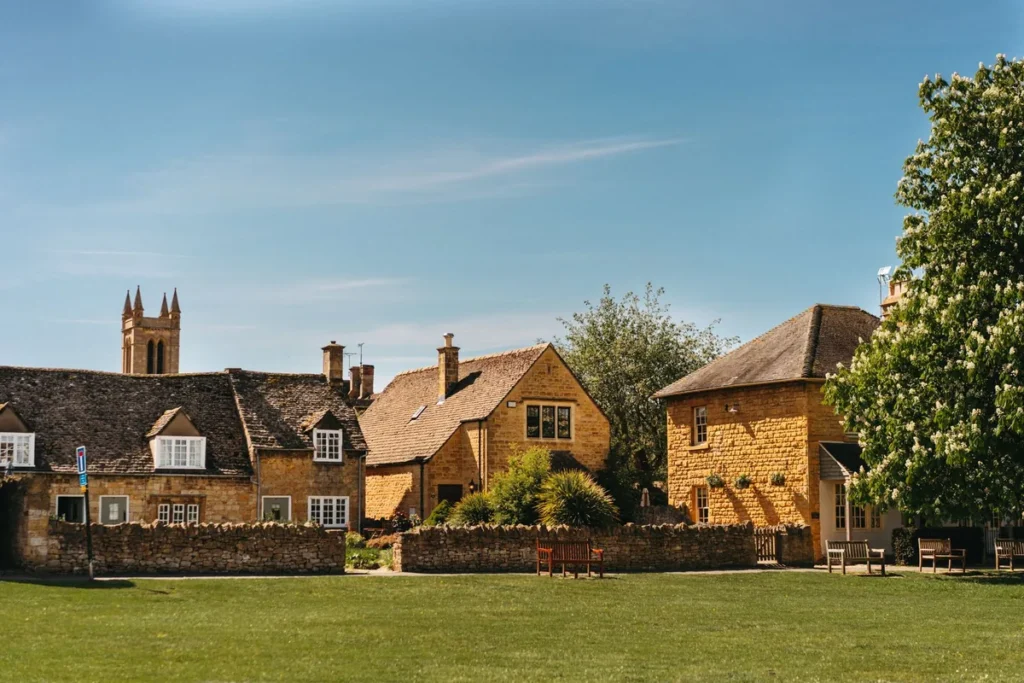
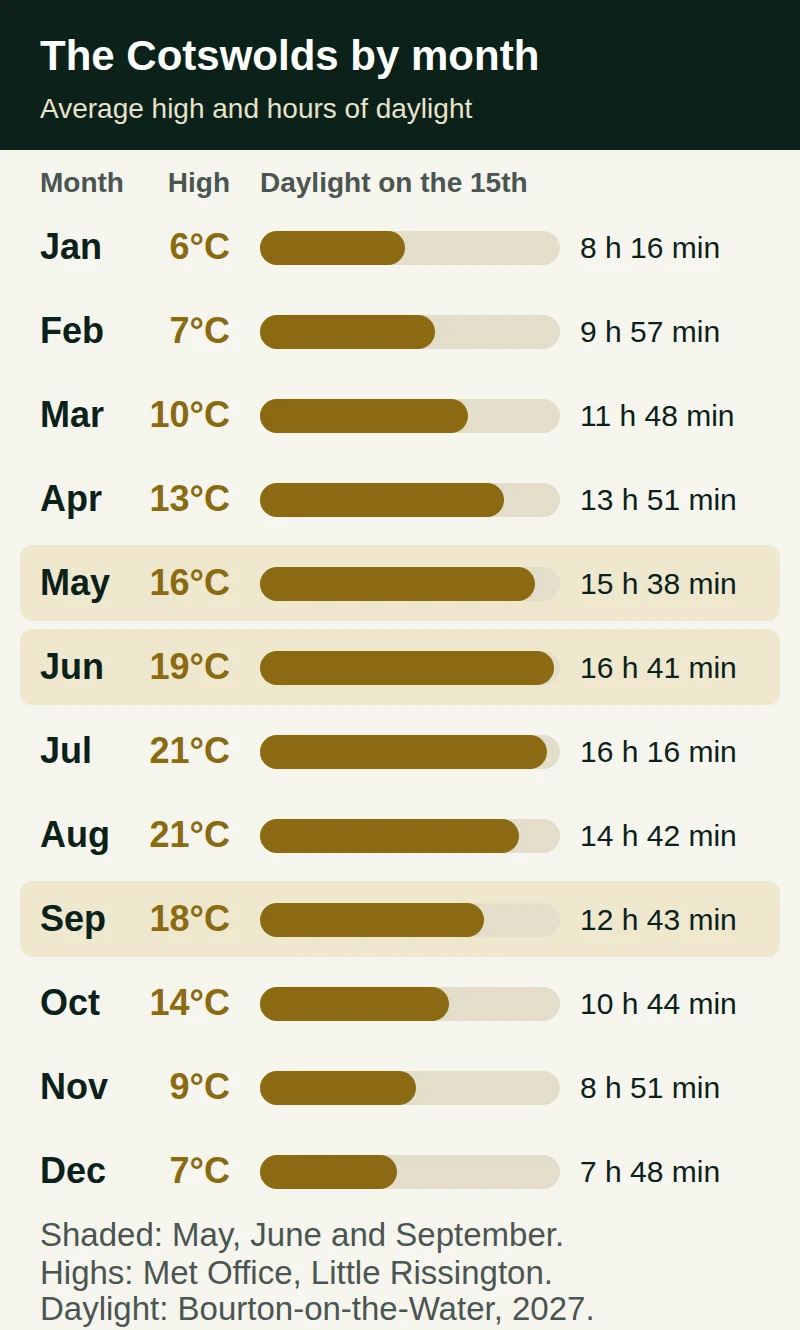
The best time to visit the Cotswolds is May, June or September. Average highs reach 16 to 19°C, daylight lasts 13 to 17 hours and most gardens are open. They also miss the late July and August school-holiday crowds. July is warmest at 21°C. Winter is quietest, but December has under 8 hours of daylight.
The Cotswolds year at a glance
Warmest: July, average high 21°C (70°F)
Coldest: January, average high 6°C (44°F), low 1°C
Driest: March, 54mm of rain
Wettest: November, 85mm of rain
Longest days: June, 16 hours 41 minutes of daylight
Shortest days: December, 7 hours 48 minutes
Busiest: the school summer holiday, from 22 July 2027 to early September
Where the figures come from
- Weather: Met Office averages for Little Rissington, a hilltop station between Bourton-on-the-Water and Burford.
- Daylight: worked out for Bourton-on-the-Water on the 15th of each month in 2027.
- Season dates: read on each official website on 17 November 2026.
When is the best time to visit the Cotswolds?
May, June and September give the best mix of warmth, long days and open gardens. Each month suits a different kind of trip:
- May: spring flowers, 16°C and the second sunniest month, with schools in term.
- June: the best all-round month, with 19°C, the longest days and lavender from the middle of the month.
- July: the warmest month and the lavender at its peak, but busy from 22 July.
- September: 18°C, schools back and more than 12 hours of daylight.
- October: leaf colour, lasting into early November at Batsford Arboretum.
- February: snowdrops and quiet villages.
- December: Christmas lights, with under 8 hours of daylight.
What is the Cotswolds weather like month by month?
Average highs run from 6°C in January to 21°C in July, and rain falls on 9 to 14 days in every month. No month is dry, so the real difference between the seasons is temperature and daylight.
| Month | Average weather and daylight |
|---|---|
| January | Temperature: high 6°C (44°F), low 1°C Rain: 78mm on 13 days Sunshine: 62 hours Daylight: 8 h 16 min, sunset 4:24pm |
| February | Temperature: high 7°C (45°F), low 1°C Rain: 55mm on 11 days Sunshine: 83 hours Daylight: 9 h 57 min, sunset 5:20pm |
| March | Temperature: high 10°C (49°F), low 2°C Rain: 54mm on 11 days Sunshine: 124 hours Daylight: 11 h 48 min, sunset 6:11pm |
| April | Temperature: high 13°C (55°F), low 4°C Rain: 56mm on 10 days Sunshine: 169 hours Daylight: 13 h 51 min, sunset 8:03pm |
| May | Temperature: high 16°C (61°F), low 7°C Rain: 66mm on 10 days Sunshine: 202 hours Daylight: 15 h 38 min, sunset 8:52pm |
| June | Temperature: high 19°C (66°F), low 10°C Rain: 57mm on 9 days Sunshine: 198 hours Daylight: 16 h 41 min, sunset 9:28pm |
| July | Temperature: high 21°C (70°F), low 12°C Rain: 62mm on 9 days Sunshine: 220 hours Daylight: 16 h 16 min, sunset 9:21pm |
| August | Temperature: high 21°C (69°F), low 12°C Rain: 65mm on 10 days Sunshine: 184 hours Daylight: 14 h 42 min, sunset 8:33pm |
| September | Temperature: high 18°C (64°F), low 10°C Rain: 64mm on 10 days Sunshine: 143 hours Daylight: 12 h 43 min, sunset 7:24pm |
| October | Temperature: high 14°C (56°F), low 7°C Rain: 84mm on 13 days Sunshine: 111 hours Daylight: 10 h 44 min, sunset 6:15pm |
| November | Temperature: high 9°C (49°F), low 4°C Rain: 85mm on 14 days Sunshine: 73 hours Daylight: 8 h 51 min, sunset 4:18pm |
| December | Temperature: high 7°C (44°F), low 2°C Rain: 83mm on 13 days Sunshine: 63 hours Daylight: 7 h 48 min, sunset 3:56pm |
- Hills and valleys: Little Rissington sits on high ground. Brize Norton, on lower ground beside Burford, averages about 1°C warmer and 100mm less rain a year.
- Frost: air frost comes on 10 to 12 days a month from December to February. An average year has 46 frost days.
- Rain days: a rain day means 1mm or more, so many of them are showers that pass.
- Averages: these are 30-year figures for 1991 to 2020, not a forecast for your date.
For the same figures in the capital, see our London weather by month.
What are the Cotswolds like in spring?
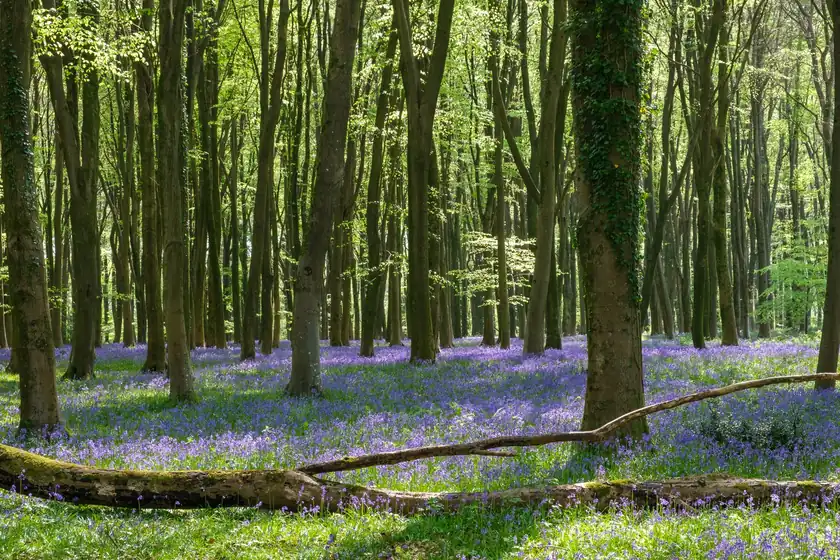
Spring runs from cool, bright March days to warm May ones, and it is the season of blossom, lambs and bluebells. The average high climbs from 10°C in March to 16°C in May, and May is the second sunniest month of the year.
- Clocks: they go forward on 28 March 2027, which moves sunset from about 6:30pm to about 7:30pm.
- Easter: Good Friday is 26 March 2027 and Easter Monday is 29 March. Local schools are off until 9 April.
- Cheltenham Festival: four days of horse racing from 16 to 19 March 2027, on the western edge of the Cotswolds.
- Batsford Arboretum: magnolias and flowering cherries, then wild garlic and bluebells. Batsford holds the National Collection of Japanese Flowering Cherries.
- Bank holidays: Monday 3 May and Monday 31 May 2027. The half-term week that follows runs to 4 June.
Tip: for a spring visit, pick a weekday between 12 April and 28 May 2027. Schools in Gloucestershire and Oxfordshire are in term then.
What are the Cotswolds like in summer?
Summer is the warmest and busiest season, with highs of 19 to 21°C and daylight until after 9pm in June and July. June is the quieter half: schools stay in term until 21 July 2027.
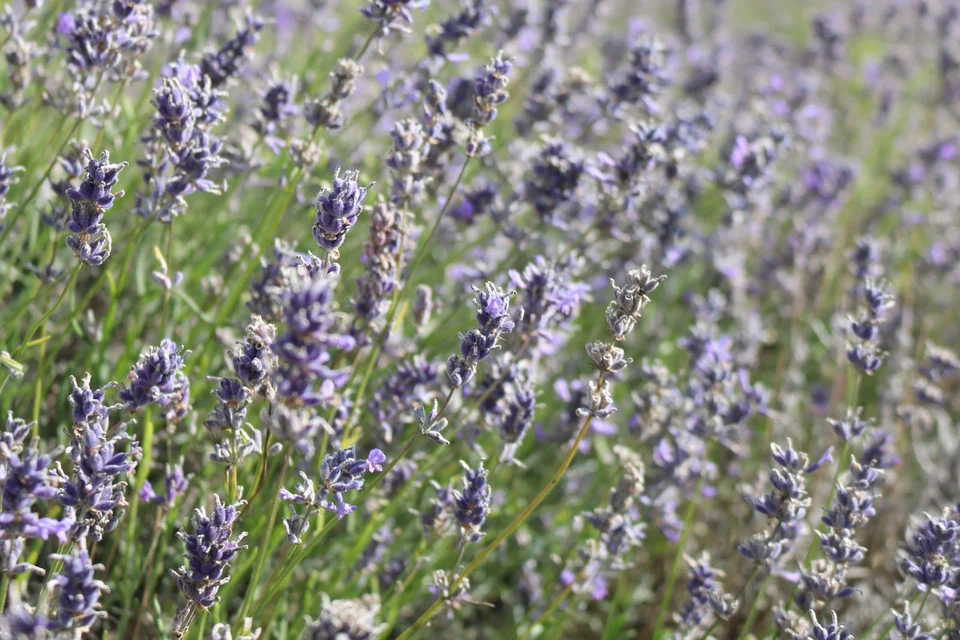
Lavender
- Where: Cotswold Lavender, near Snowshill.
- Open: from mid-June to early August.
- Best display: towards the end of June and in July, the farm says.
- Harvest: usually starts around 20 July.
- Busiest: July.
Summer events
- The Cotswold Show: 3 and 4 July 2027 in Cirencester Park.
- Giffords Circus: on tour from April to September 2027, with stops at Sudeley Castle, Barrington, Cirencester and Minchinhampton Common.
- Football in the River: a match played in the River Windrush at Bourton-on-the-Water each August Bank Holiday Monday. In 2027 that Monday is 30 August.
Crowds
- Bourton-on-the-Water: “often extremely busy, especially at weekends and during good weather”, says Visit Cotswolds, the official tourist board.
- Its advice: visit outside the peak summer season.
- If August is your only choice: go midweek and start early.
What are the Cotswolds like in autumn?
September still feels like summer at 18°C, October brings the leaf colour, and November is the wettest month. Schools return in the first week of September, so the villages quieten while the days stay over 12 hours long.
- Batsford Arboretum: beech and oak give most of the colour, which often lingers into early November.
- Westonbirt, The National Arboretum: known for its Japanese maples. Forestry England strongly advises booking ahead for autumn visits.
- Painswick Beacon and Hidcote: both named by Visit Cotswolds for autumn views.
- Clocks: they go back on 31 October 2027, and sunset moves an hour earlier overnight.
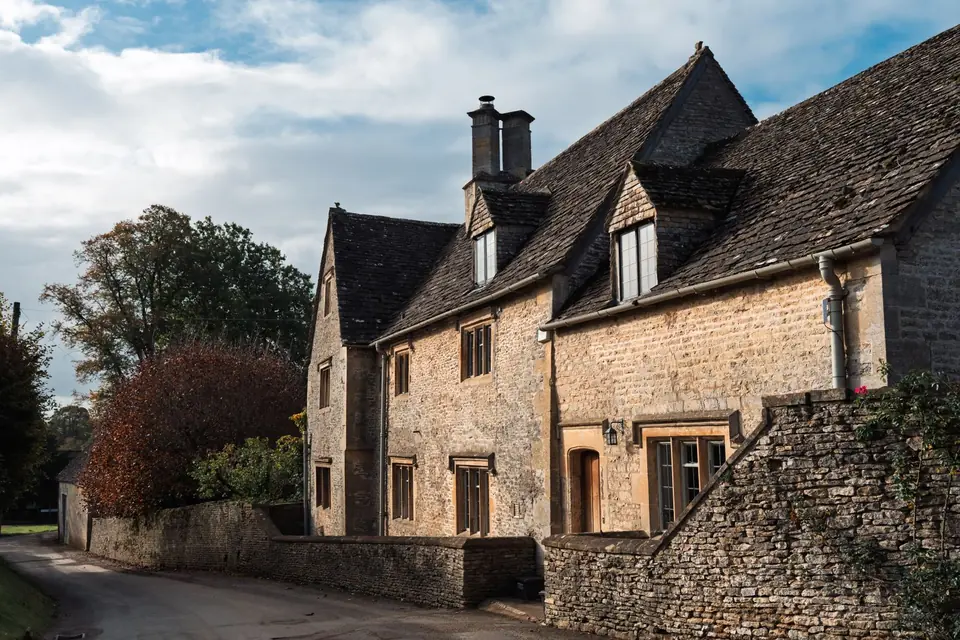
Tip: the October school half-term usually falls in the last week of the month. The first three weeks are calmer for leaf colour.
Is it worth visiting the Cotswolds in winter?
Yes, if you plan around the short days. The villages are at their quietest, but daylight is under 9 hours from mid-November to late January. Highs sit at 6 to 7°C, and Visit Cotswolds describes the landscape as changed by frost and, occasionally, a blanket of snow.
The Cotswolds in December
- Daylight: sunrise is about 8:10am and sunset about 3:55pm in mid-December.
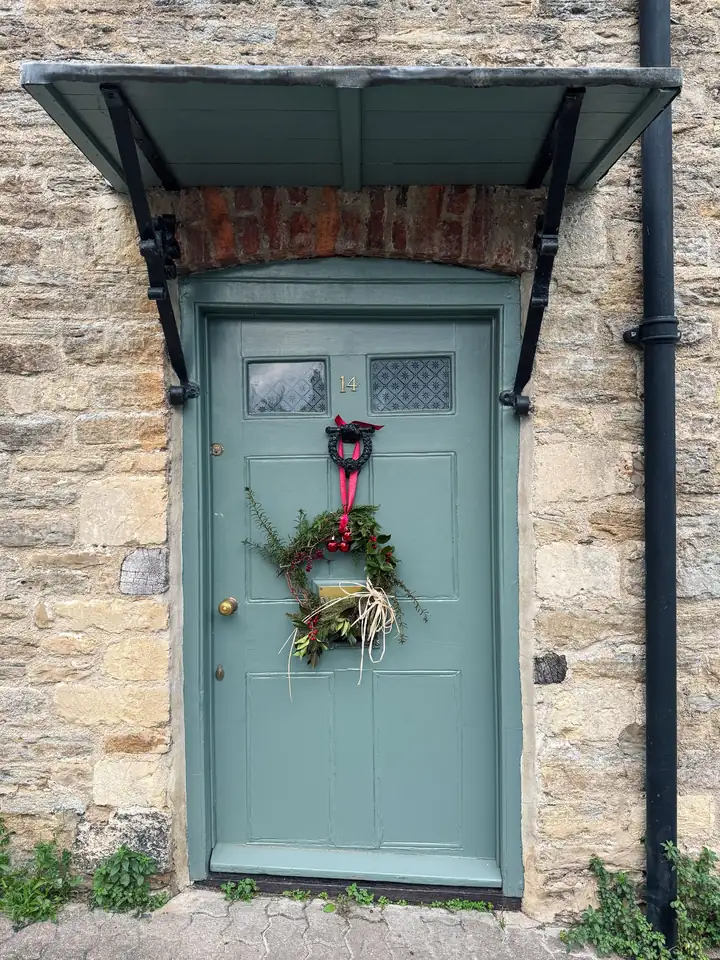
- Bourton-on-the-Water: the Christmas lights go on at 5:30pm on 27 November 2026, with a tree standing in the river. By tradition the tree stays until January.
- Christmas markets: Cirencester and Cheltenham both hold them.
- Bank holidays: Monday 27 and Tuesday 28 December 2027, as Christmas Day falls on a Saturday.
The Cotswolds in January and February
- January: the coldest month, with frost on 12 days.
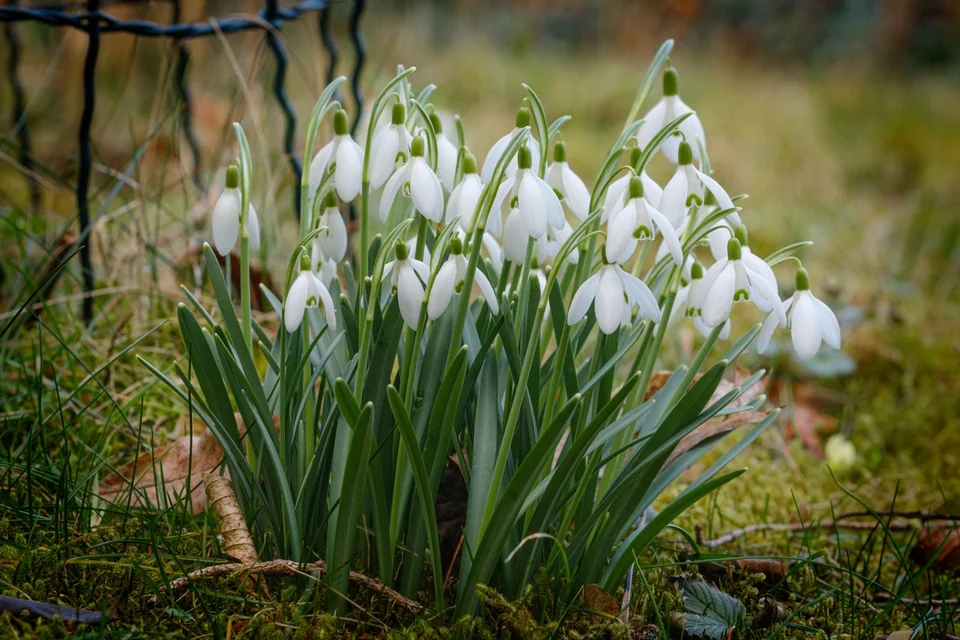
- February: the month for snowdrops.
- Painswick Rococo Garden: about 5 million snowdrops, usually at their best in mid to late February.
- Booking: the garden asks visitors to book ahead in snowdrop season.
What is closed in the Cotswolds in winter?
The villages, churches and most of Bourton’s attractions stay open, but several big houses and gardens shut for weeks. These are the closures published for winter 2026 to 2027:
Winter 2026 to 2027
Sudeley Castle: closed until March 2027
Cotswold Lavender: fields closed until mid-June 2027
Snowshill Manor and Chedworth Roman Villa: closed from 30 November to 31 December 2026
Hidcote: Friday to Sunday in late November, then closed in December apart from 26 and 27 December
Cotswold Wildlife Park: closed on weekdays from 4 January to 4 February 2027, open at weekends
Birdland: open daily 10am to 4pm all year, except 24 and 25 December
Tip: the National Trust had not published its 2027 opening days when we checked, so look at each calendar before you travel.
Opening hours and prices for 19 places are in our guide to things to do in the Cotswolds.
When are the Cotswolds least crowded?
Tuesday to Thursday in school term is the calmest time, and early morning is quieter than midday in any month. The busy periods follow the school calendar in England rather than the weather.
Busy dates in 2027
School dates are those of Gloucestershire and Oxfordshire; other counties differ by a few days.
February half-term: 15 to 19 February
Easter: 26 March to 9 April
May bank holidays: 3 May and 31 May, with half-term to 4 June
Summer holiday: 22 July to the start of September
August bank holiday: 30 August
Bourton-on-the-Water
- Busiest: holidays and sunny weekends, when the parish council says the village is “as bustling as any seaside resort”.
- Quietest: early or late in the day, by the council’s own rule of thumb.
Bibury
- Busy for most of the year: a county councillor described the village as chaotic almost all year round.
- Coaches: Gloucestershire County Council has closed the coach bays in the centre. The new stops have a 10-minute limit.
- Best hour: before 10am, by car.
To choose villages that sit close together, see the best Cotswolds villages to visit and our Cotswolds map.
Which months work best for a day trip from London?
April to September, when there is daylight for the whole day and the drive home. Burford is 1 hour 47 minutes from central London by car. A day that leaves at 8am reaches the first village before 10am.
- April to September: sunset is after 7pm, so you can stay in the villages until late afternoon.
- October and March: sunset is around 6pm, which still covers a full day.
- November to January: sunset is before 4:30pm. Leave London at 8am, plan three stops and expect to drive back in the dark.
- Castle Combe: it adds at least two hours to the day, so keep it for April to September. See our Castle Combe guide.
- By train or bus: both run all year. Our guide on how to get from London to the Cotswolds compares them with a car.
- With a driver: our private Cotswolds day trip from London costs £500 for the whole car, up to three passengers, for about nine hours, in any month.

What should you wear in the Cotswolds?
Bring a waterproof layer in every month and shoes that can cope with mud from October to April.
- December to February: a warm coat, hat and gloves. Frost comes on about one morning in three.
- March to May: layers. A 13°C April afternoon can follow a 4°C morning.
- June to August: light clothes and a jumper for the evening, when it drops to about 12°C.
- September to November: a rain jacket. October and November bring 84 to 85mm of rain.
FAQ: the best time to visit the Cotswolds
What is the best month to visit the Cotswolds?
June is the best single month. The average high is 19°C, daylight lasts more than 16 hours and rain falls on only 9 days. Schools are in term until late July, so villages are calmer than in August. The lavender fields near Snowshill open from the middle of the month.
What is the rainiest month in the Cotswolds?
November is the wettest month, with an average of 85mm of rain on 14 days at Little Rissington. October and December are close behind at 84mm and 83mm. March is the driest at 54mm. Rain falls on at least 9 days in every month, so pack a waterproof layer all year.
Does it snow in the Cotswolds?
Sometimes, but not every winter. The Met Office records air frost on about 46 days a year at Little Rissington, mostly from December to February. Visit Cotswolds describes winter as frosty with, occasionally, a blanket of snow. January is the coldest month, with an average low of 1°C.
Is December a good time to visit the Cotswolds?
Yes, for Christmas lights and quiet villages, if you accept short days. Daylight lasts under 8 hours and sunset is before 4pm. Bourton-on-the-Water puts a Christmas tree in the river, and Cirencester and Cheltenham hold Christmas markets. Sudeley Castle and some National Trust houses are closed.
When is the lavender in bloom in the Cotswolds?
From mid-June to early August. Cotswold Lavender, near Snowshill, says colour starts to show around the middle of June. The fields look their best at the end of June and in July. Harvest usually begins around 20 July, so go before then. Exact 2027 opening dates were not yet published in November 2026.
When is the busiest time in the Cotswolds?
The school summer holiday, which in 2027 runs from 22 July to early September, along with bank holiday weekends and sunny Saturdays and Sundays. The official tourist board calls Bourton-on-the-Water often extremely busy at weekends and in good weather. Weekdays in May, June and September are far calmer.
Sources
Main sources, read on 17 November 2026. Opening dates for each attraction come from its own website. Daylight times are our own calculation.