
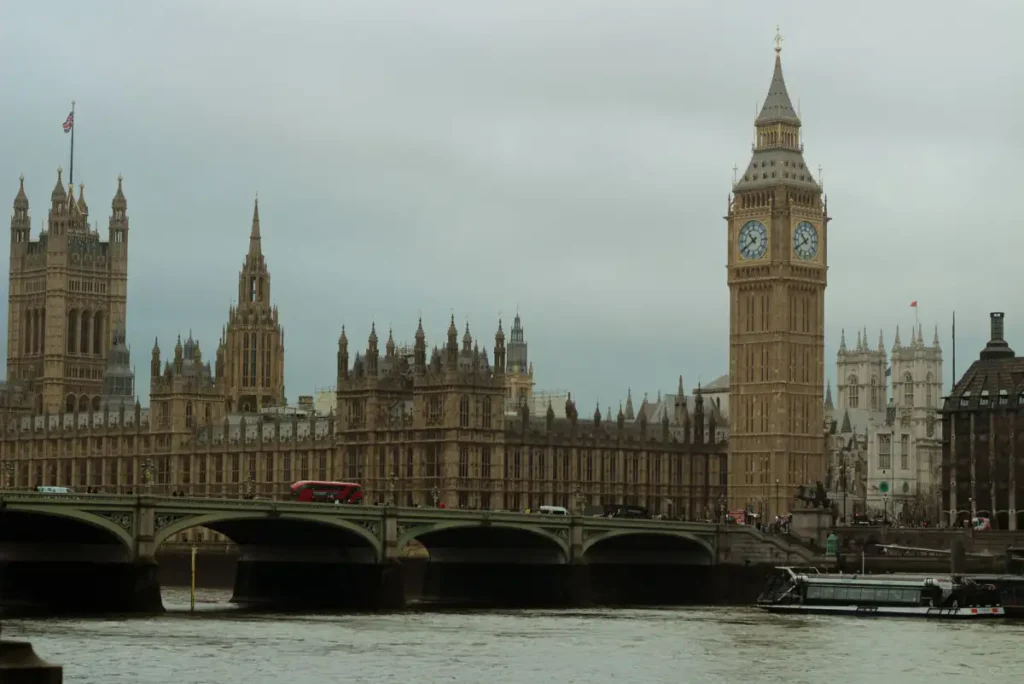
The weather in London in January averages a daytime high of 8.4°C and an overnight low of 2.7°C, with 58.8mm of rain, 59 hours of sunshine and about seven nights of air frost — making it the coldest month of the London year and the second-darkest after December.
Daylight is short but improving: 7 hours 55 minutes on 1 January, rising to 9 hours 5 minutes by the 31st, so the month gives back more than an hour of light as it goes. Settling snow is uncommon; cold rain and grey cloud are the realistic expectation. What January offers in return is the emptiest, cheapest version of London there is — the museums are free and quiet, the theatres discount, and hotel rates sit at their annual floor. Dress for damp cold and plan your outdoor hours between 10:00 and 15:00. All climate figures come from the Met Office record for the Heathrow station, 1991–2020.
Weather in London in January at a Glance
| Average daily high | Average daily low | Rainfall | Sunshine | Nights of air frost | Daylight on 1 / 31 Jan |
|---|---|---|---|---|---|
| 8.4°C | 2.7°C | 58.8 mm | 59 hours | 6.8 | 7h 55m / 9h 05m |
Two numbers in that table do the real work. Fifty-nine hours of sunshine over thirty-one days is under two hours a day, so most of January passes under cloud. And 6.8 nights below freezing mean the cold is genuine but occasional — this is not a month of continuous freezing, it is a month of grey damp punctuated by a few clear cold nights.
How Cold Is London in January?
January is the coldest month of the year in London, averaging 8.4°C by day and 2.7°C at night. Unlike almost every other month, it has not warmed in recent years: the 2021–2025 average daily high was 8.1°C, marginally below the 30-year figure, and those years averaged 9.8 frost nights rather than 6.8.
The number still understates the experience. London cold is wet cold, and 5°C with drizzle and a wind off the Thames is harder work than a dry −5°C in a continental city. Daytime temperatures below freezing are rare in the centre; the city’s own heat keeps it a degree or two above the surrounding countryside, which is also why the frost you see on a January morning is usually in the outer parks rather than on Oxford Street.
Does It Snow in London in January?
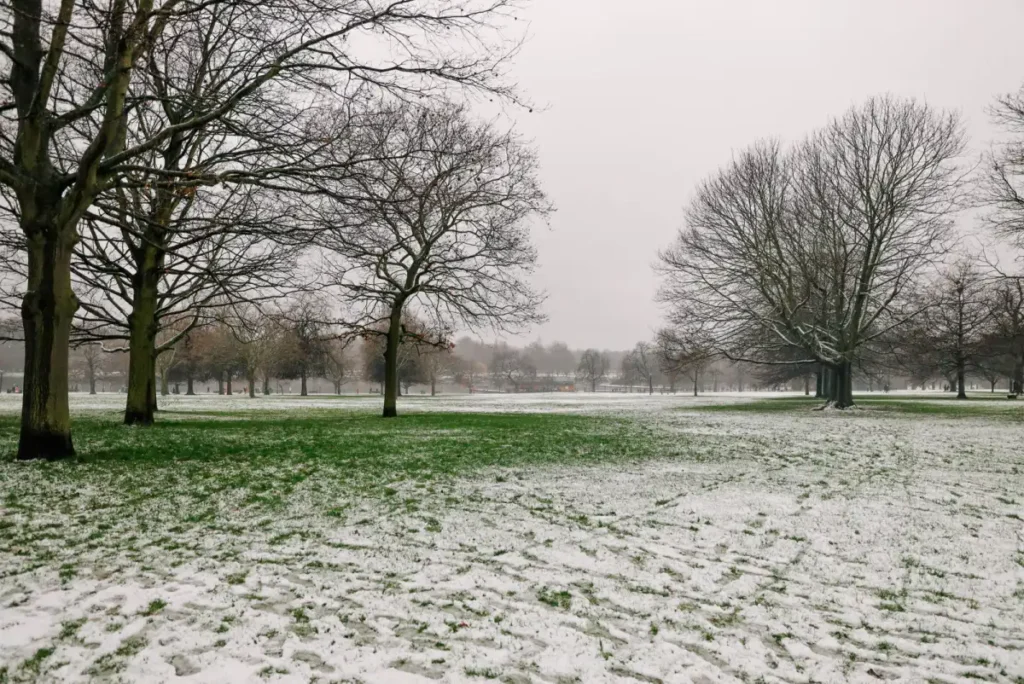
Snow falls in some Januarys but rarely settles for long in central London. The city sits close to the mild Atlantic air stream, and most winter precipitation arrives as rain or sleet. A snow event that closes anything is a once-in-several-years occurrence rather than an annual one.
When it does snow, plan for disruption rather than scenery: buses come off hilly routes, overground rail thins out and airports slow down. The far more common January weather problem is the opposite — prolonged rain. January 2026 recorded 104.6mm at Heathrow, nearly double the long-run average, and the 2021–2025 mean was 60.8mm against 58.8mm over thirty years. A waterproof coat matters more in January than any winter accessory.
How Dark Is London in January?
January is dark but improving all month: sunset moves from 16:02 on the 1st to 16:47 on the 31st. On 1 January the sun rises at 08:07 and sets at 16:02, giving 7 hours 55 minutes of daylight; by the 31st it is 07:42 to 16:47, giving 9 hours 5 minutes. That is a gain of an hour and ten minutes across the month, and the difference between the first week and the last is noticeable in daily life.
The practical rule is the same as December: one outdoor thing per day, done in the middle of the day. Anything that depends on a view — the river, the parks, a high vantage point, a day trip — belongs between 10:00 and 15:00. The upside is that January’s indoor offer is the strongest of the year, because the museums that are packed in August are close to empty.
What to Wear in London in January
A warm waterproof coat, thermal layers and genuinely waterproof shoes cover any normal January day in London. The temperature does not demand extreme winter clothing, but the combination of 8°C, rain and wind does demand that everything be both warm and dry.
- A warm, hooded waterproof coat — wind makes umbrellas unreliable through most of the winter.
- Thermal or thick base layers, which do more than one heavy coat and take less space.
- Waterproof boots with grip — wet stone and occasional ice are the real hazard.
- Hat, scarf and gloves, all three; most heat is lost standing still, waiting for a bus or a table.
- A power bank — cold drains phone batteries and you will be navigating in the dark.
- Layers you can strip off, because London interiors are heated hard in January.
What Is On in London in January
The month opens with the New Year’s Day Parade through the West End and then settles into the quietest month of the London calendar. The parade runs on 1 January along a route from Piccadilly to Parliament Square, with road closures across the centre for most of the day.
After that, the month belongs to the things that are always there and are usually too crowded to enjoy. The permanent collections at the British Museum, the National Gallery, the V&A, the Natural History Museum and Tate Modern are free and, in the second and third weeks of January, genuinely quiet. Theatre tickets are at their cheapest of the year, and restaurants that require months of notice in December take walk-ins. The January sales continue through the first half of the month, with the West End busiest on the first weekend and calm thereafter. To spread these quiet galleries and shows across a longer stay, see our 5 days in London by car plan.
Is January a Good Time to Visit London?
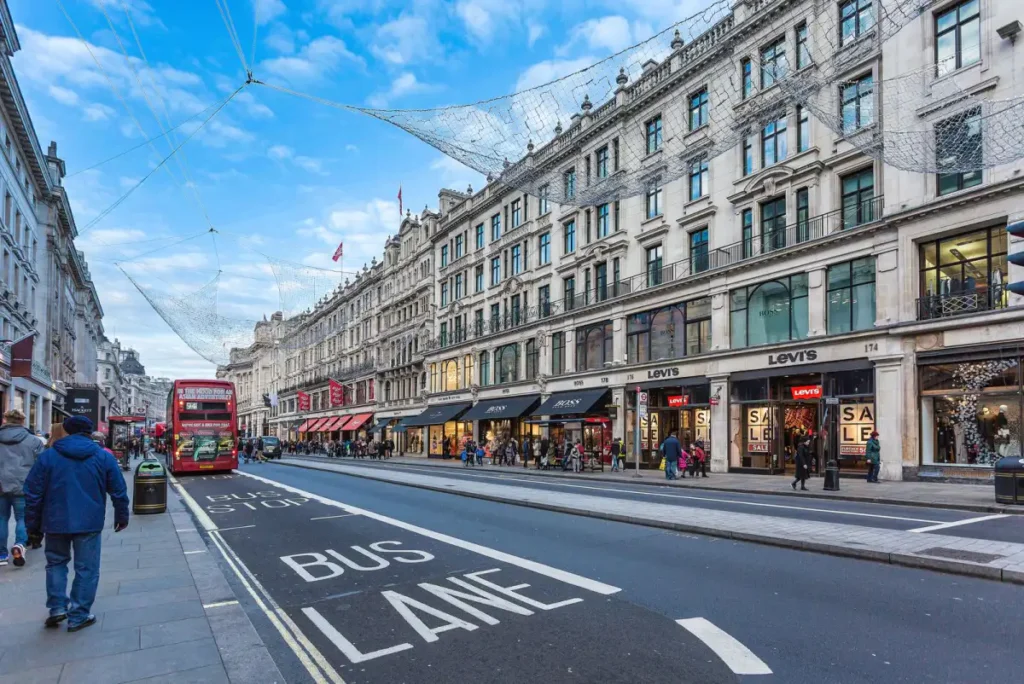
January is the best value month of the London year and the worst for weather. Hotel rates hit their annual floor in the second week, flights are cheap, and the queues that define summer simply do not exist. If your trip is about museums, galleries, theatre, food and shopping, January is an excellent and badly underrated choice.
If your list is full of parks, river walks and viewpoints, it is the wrong month: you have under nine hours of daylight, under two hours of sunshine a day and a real chance of rain. Against December, January is half a degree colder but has more daylight and none of the Christmas premium. Against February, it is slightly colder and darker, and February has warmed considerably more in recent years.
London Weather in January: Early Month vs Late Month
The first week is still festive and busy; the rest of the month is the quietest London gets. Decorations stay up into the first week, the sales are running and New Year visitors are still in town. From about the 8th the city empties out. Hyde Park’s Winter Wonderland stays open until 3 January 2027, so the first days of the year still catch it, and a private car to Winter Wonderland drops you near the gates.
Weather-wise the second half is usually the colder half — the coldest spells of the British winter typically arrive in late January and early February — but it is also the lighter half, with 45 more minutes of afternoon by the end of the month. For the best combination of low prices, short queues and improving light, the last ten days of January are the sweet spot.
Getting Around London in January
This is the easiest month to move around London, with one exception: the first two days and any cold snap. Services are reduced on 1 January and the New Year’s Day Parade closes central roads. After that, the Tube is at its most comfortable of the year — no summer heat, no Christmas crowds.
Airports are the pressure point in winter. Fog, ice and winter storms are the common causes of delay at Heathrow and Gatwick, and an evening arrival in January lands into darkness and rain; with Meet & Assist at the Heathrow aircraft door, someone is waiting for you the moment you step off the plane. A pre-arranged London airport transfer tracks the flight and waits through the delay, and our Heathrow-to-hotel car service removes the part of a winter arrival that goes wrong most often.

With under nine hours of daylight, a day trip out of London only works if it starts early. A private car and driver in London is what makes Windsor, Oxford or Stonehenge and Bath realistic in January, and a private guide for a day in London turns a short winter day into a full one.

Frequently Asked Questions
How cold does London get in January?
January averages 8.4°C by day and 2.7°C at night, with about seven frosty nights. It is the coldest month of the year, but daytime temperatures below freezing are rare in central London.
Does it snow in London in January?
Occasionally, but it rarely settles. Rain and sleet are far more common. The bigger January risk is prolonged rain: January 2026 recorded 104.6mm at Heathrow against a 58.8mm long-run average.
What time does it get dark in London in January?
Sunset moves from 16:02 on 1 January to 16:47 on the 31st, and daylight grows from 7 hours 55 minutes to 9 hours 5 minutes. Plan outdoor sightseeing between 10:00 and 15:00.
Is January the cheapest month to visit London?
Yes, alongside the first half of November. Hotel rates reach their annual floor in the second week of January, and the free museums and West End theatres are at their quietest.
What should I pack for London in January?
A warm waterproof coat with a hood, thermal layers, waterproof boots, and a hat, scarf and gloves. Prioritise staying dry over staying warm — London’s winter cold is damp rather than extreme.
Planning a January Trip
January rewards a museum-and-theatre itinerary more than any other month, and punishes one built around parks and views. Build the days around the middle hours, keep everything waterproof, and take advantage of the fact that the city’s best indoor attractions are both free and empty. Check availability and prices for an airport transfer or chauffeur and we will handle the dark, wet part of the journey.
Sources
Temperature, rainfall, sunshine and air-frost figures are 1991–2020 averages calculated from the Met Office Heathrow station record, which also supplies the individual recent years quoted. Sunrise and sunset times are calculated for central London.
Planning a trip across several months? London weather month by month sets all twelve months side by side.