
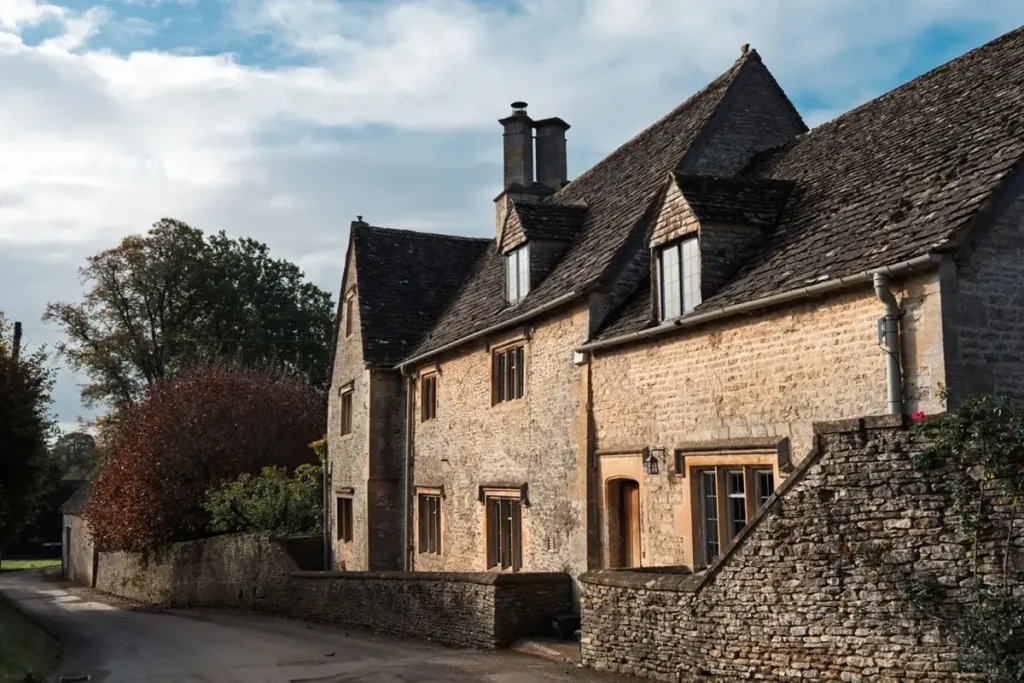
Stow-on-the-Wold is a market town in the north Cotswolds and, at about 800 feet, the highest town in the hills. Its large square, the yew-framed door of St Edward’s Church and its antique shops fill two to three hours. It is 82 miles from London, about 2 hours 5 minutes by car.
Stow-on-the-Wold at a glance
Where: north Cotswolds, Gloucestershire, 4 miles south of Moreton-in-Marsh
Known for: the market square, St Edward’s yew door, antiques and Civil War history
Time needed: two to three hours, or half a day with lunch
From London: 82 miles, about 2 hours 5 minutes by car
Nearest stations: Kingham (13 minutes) and Moreton-in-Marsh (15 minutes) by taxi
This guide covers what to see in the town, how its history shaped the streets you walk today, how long to stay, and the drive times we measured from Stow to the villages around it.
Where is Stow-on-the-Wold, and is it worth visiting?
Stow-on-the-Wold sits on a hilltop in the north Cotswolds, between Moreton-in-Marsh to the north and Bourton-on-the-Water to the south. It is a small town of under 2,000 people, built almost entirely in golden Cotswold stone around one large market square.
It is worth visiting if you like old market towns, churches and browsing shops more than riverside views. Bourton-on-the-Water is busier and prettier at water level; Stow is quieter, higher and more of a real working town. Many visitors pair the two, as they are only 12 minutes apart by car.
A “wold” is open high ground, and the name fits. At about 800 feet above sea level, Stow is the highest town in the Cotswolds. A local rhyme calls it the place where the wind blows cold.
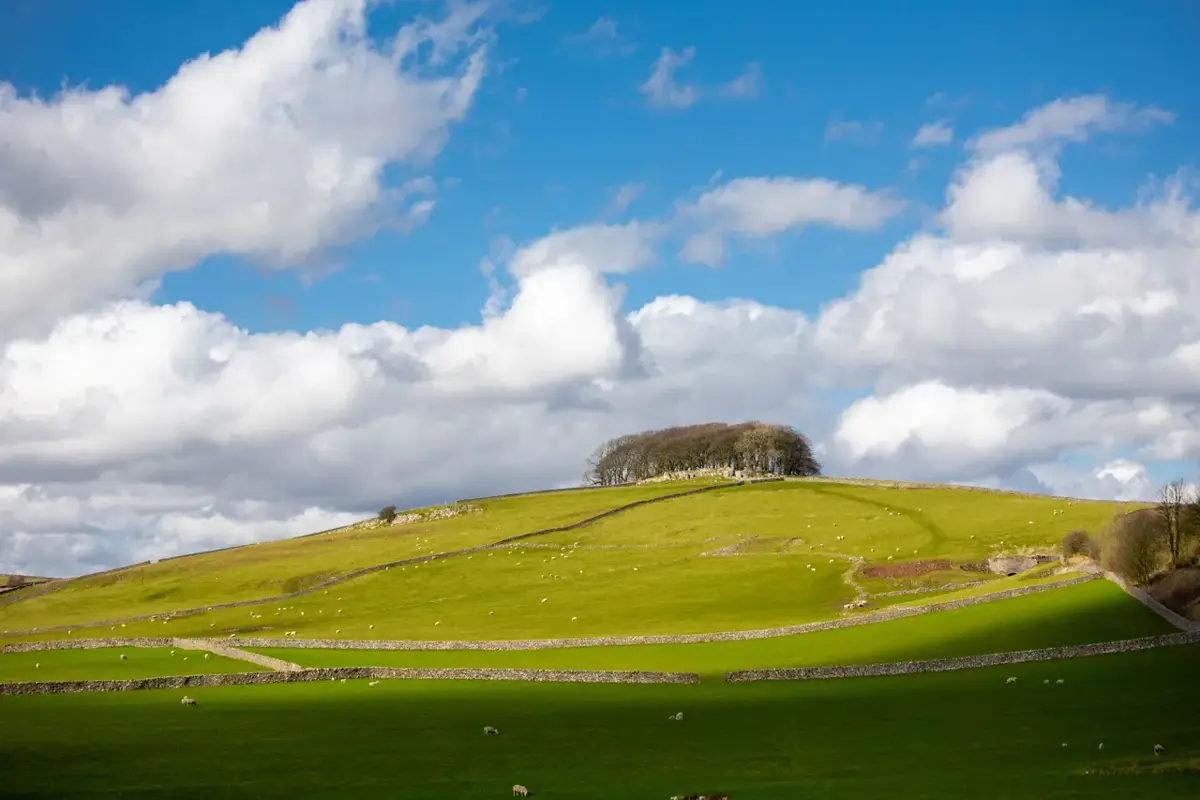
Our guide to the best Cotswolds villages shows how Stow fits among the other villages. The Cotswolds map places it within the whole range of hills.
What are the best things to do in Stow-on-the-Wold?
The best things to do in Stow-on-the-Wold are the market square, the yew-framed door of St Edward’s Church, the narrow alleys and the antique shops. All of them are within a few minutes’ walk of each other.
The market square, the cross and the stocks
The large square is the heart of Stow, lined with stone houses, inns and shops. The medieval Market Cross stands in it, and so do the old stocks once used to punish wrongdoers in public.
St Edward’s Church and its yew tree door
Behind the square, St Edward’s Church has its most photographed feature on the north side. Two ancient yew trees grow tight against the doorway, so their trunks frame the old wooden door like the posts of a gate.
The door is often linked with the Doors of Durin in Tolkien’s stories, though no record shows the idea came from Stow. The church is usually open from 9am to 5pm in summer and until dusk in winter, and visitors are asked for a donation.
The narrow alleys off the square
Several very narrow passages run between the buildings off the square. Local history says they were built narrow on purpose, so drovers could count sheep in single file on their way to market. Walking through them takes only minutes, and they make some of the best photographs in town.
Antique shops, galleries and tea rooms
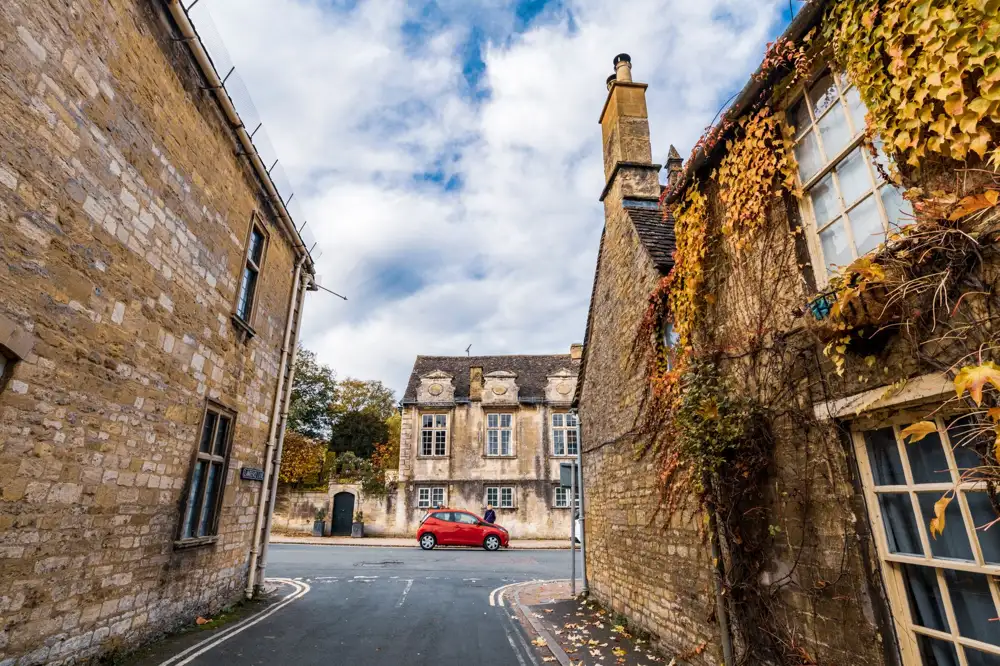
Antique dealers, galleries, bookshops and tea rooms fill the square and the streets leading off it, between old coaching inns. For many visitors, browsing these shops is the main reason to come, so allow more time if antiques interest you.
St Edward’s Hall
The Victorian hall in the middle of the square was built in 1878, paid for with unclaimed money from the town savings bank. Today it houses the public library and displays on the Civil War battle fought near the town.
Tip: come early in the day. The square and the yew door are quietest in the morning, and the door is much easier to photograph without people in front of it.
For ideas across the wider area, see our list of things to do in the Cotswolds.
What is the history of Stow-on-the-Wold?
Stow-on-the-Wold grew rich as a market town for sheep and wool, with markets held here since 1107 and royal fairs since 1330. Its hilltop sat where several old routes met, so traders and drovers passed through from every direction.
| Year | What happened |
|---|---|
| 1107 | A regular market begins in Stow |
| 1330 | The town is granted the right to an annual fair |
| 1476 | Two fairs a year, in May and October |
| 1646 | The last battle of the first English Civil War is fought nearby |
| 1700s | Daniel Defoe reports 20,000 sheep sold in a single day |
| 1878 | St Edward’s Hall is built on the square |
The wool trade paid for the large square and the fine stone houses around it. Daniel Defoe, the author of Robinson Crusoe, wrote that 20,000 sheep were sold at one Stow fair in a single day.
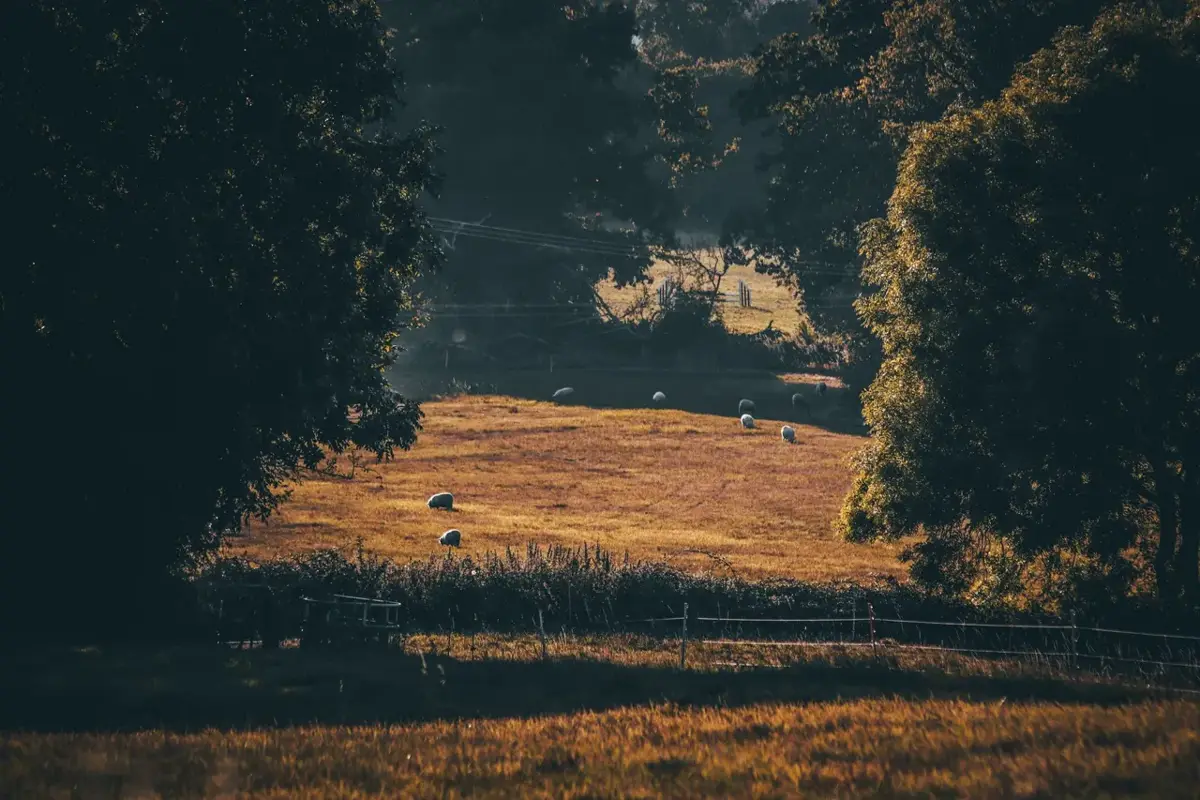
On 21 March 1646 a Royalist army was defeated near Stow in the final battle of the first Civil War. The Royalists surrendered at the Market Cross, and hundreds of prisoners were held for a time inside St Edward’s Church. One street, Digbeth, is said to take its name from the “duck’s bath” of blood that flowed down it.
The fairs live on. A large horse fair is still held on the edge of town each May and October. It now takes place in a field near Maugersbury rather than in the square.
How long do you need in Stow-on-the-Wold?
Two to three hours is enough to see Stow-on-the-Wold properly. Allow an hour for the square, the church and the alleys, and the rest for shops and a meal. Stay half a day if you enjoy antiques, as the shops are the reason many people come.
- One hour: the square, the Market Cross, the yew tree church door and one alley.
- Two to three hours: add the antique shops, St Edward’s Hall and lunch or afternoon tea.
- Half a day: combine Stow with Upper and Lower Slaughter, each 12 to 13 minutes away.
- A full day: Stow, the Slaughters and Bourton-on-the-Water make an easy loop with very little driving.
How do you get from London to Stow-on-the-Wold?
By car, Stow-on-the-Wold is 82 miles from central London, about 2 hours 5 minutes on a weekday morning. There is no station in Stow itself, so train travellers finish the trip by taxi or bus.
| Option | Time and cost (read November 2026) |
|---|---|
| Car from central London | 2 hours 5 minutes on a weekday at 8am; 1 hour 54 minutes on a Saturday |
| Car from Heathrow | 1 hour 41 minutes |
| Train to Moreton-in-Marsh | 1 hour 24 minutes to 1 hour 33 minutes from Paddington; Super Off-Peak return £54 |
| Moreton-in-Marsh to Stow | about 15 minutes by taxi (around £14) or 20 minutes on the 801 bus |
| Train to Kingham | about 1 hour 20 minutes from Paddington, then 13 minutes by taxi |
The 801 bus runs about once an hour between Moreton-in-Marsh, Stow and Bourton-on-the-Water, Sundays included. Kingham station has no regular bus, so book a taxi before you travel. The trip home takes longer: we measured 2 hours 14 minutes back to central London leaving Stow at 3:30pm.
Our full guide to how to reach the Cotswolds from London compares every option door to door.
What is near Stow-on-the-Wold?
Upper and Lower Slaughter, Bourton-on-the-Water, Moreton-in-Marsh and Daylesford are all within 15 minutes of Stow-on-the-Wold by car. That short distance to so many places is why Stow works well as a base. We measured each drive from the market square on a weekday late morning.
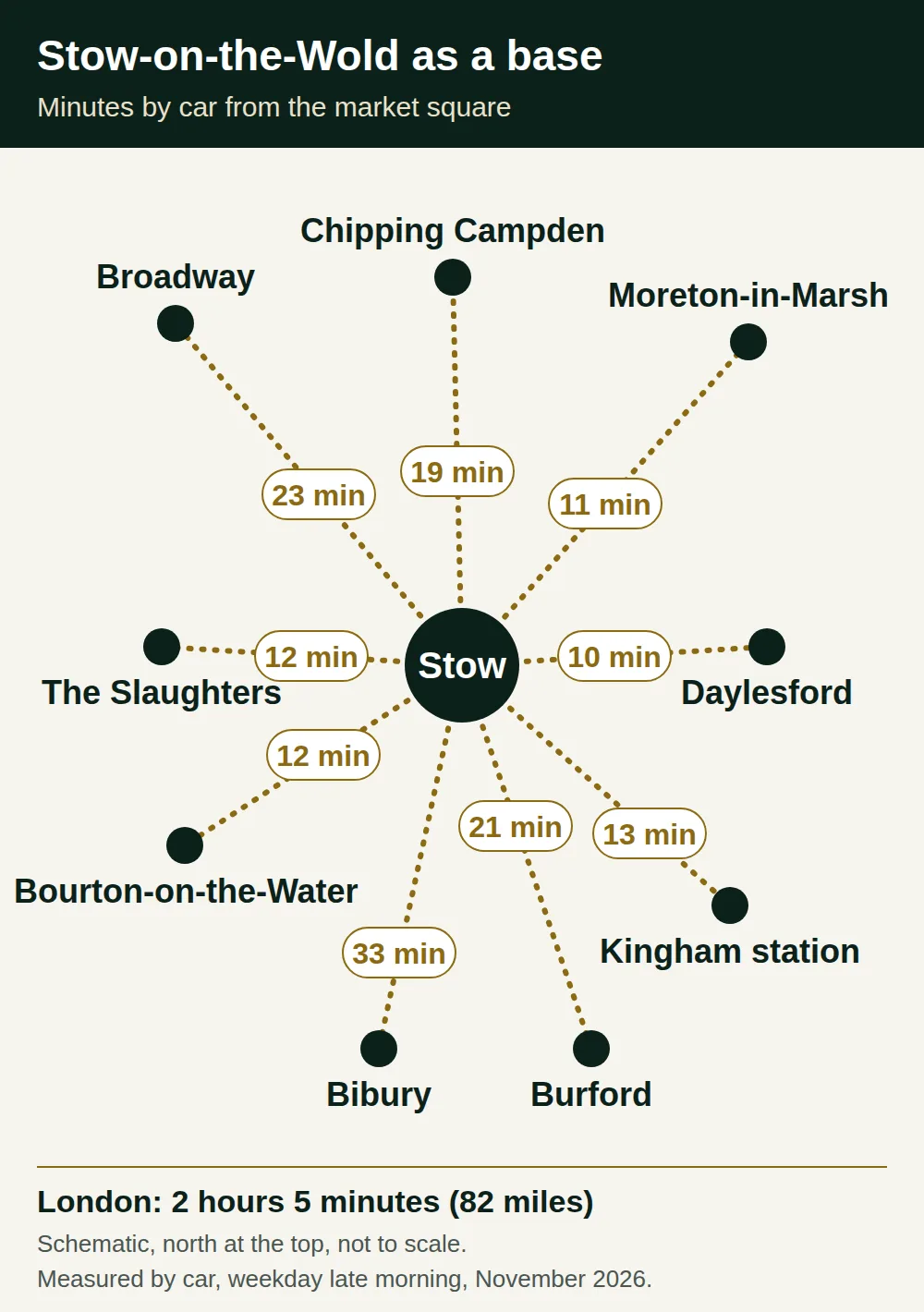
| From Stow to | By car |
|---|---|
| Daylesford | 10 minutes, 4.0 miles |
| Moreton-in-Marsh | 11 minutes, 4.3 miles |
| Upper Slaughter | 12 minutes, 3.5 miles |
| Bourton-on-the-Water | 12 minutes, 4.2 miles |
| Lower Slaughter | 13 minutes, 4.1 miles |
| Batsford Arboretum | 15 minutes, 6.1 miles |
| Chipping Campden | 19 minutes, 10.2 miles |
| Burford | 21 minutes, 10.4 miles |
| Broadway | 23 minutes, 11.8 miles |
| Bibury | 33 minutes, 16.9 miles |
- The Slaughters: two tiny villages on a stream, quieter than Bourton and easy to add to a Stow visit.
- Daylesford: a well-known organic farm shop and café in the countryside east of Stow.
- Batsford Arboretum: 60 acres of trees near Moreton-in-Marsh, best for autumn colour; entry is £10.90.
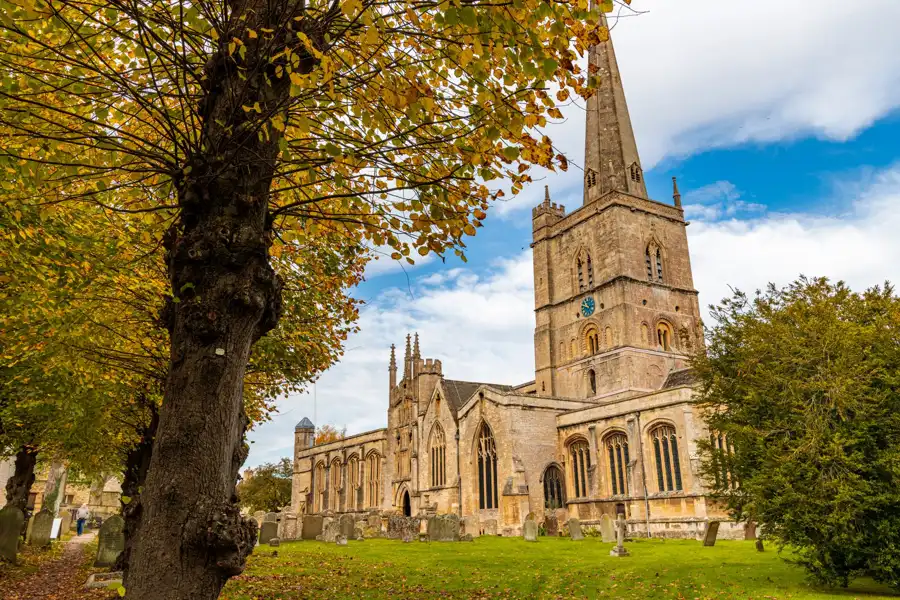
- Burford and Bibury: further south, and the first two stops on most day trips from London.
When is the best time to visit Stow-on-the-Wold?
The best time to visit Stow-on-the-Wold is a weekday morning between April and October, when the days are long and the square is quiet. Stow stays open all year, as its shops, inns and church do not close for winter.
- Spring and summer: long days for combining Stow with the Slaughters and Bourton; summer weekends are the busiest.
- Horse fair days in May and October: the town is very full, so check the dates before you plan a quiet visit.
- Farmers market: the town council lists the next markets on 26 November and 10 December 2026, from 9am to 1pm.
- Winter: fewer visitors and cosy inns, but Stow is high and exposed, so bring a warm coat.
Our month-by-month guide to the best time to visit the Cotswolds covers daylight, crowds and weather across the year.
Can you visit Stow-on-the-Wold on a day trip from London?
Yes. Stow-on-the-Wold works as a day trip from London: about 2 hours each way by car, with time for Stow and two or three nearby villages. By train the day is possible too, but the taxi or bus from the station limits how many places you can add.
Our private Cotswolds day trip from London costs £500 for the whole car, up to three passengers, and lasts about nine hours. The usual route is Burford, Bibury, Bourton-on-the-Water and Lower Slaughter. Stow is 12 minutes from Bourton, so tell us when booking and we include it in the plan and the fare. For a longer stay, there is a 5-day Cotswolds tour.

FAQ: Stow-on-the-Wold
What is Stow-on-the-Wold famous for?
Stow-on-the-Wold is famous for its large market square, the north door of St Edward’s Church framed by two yew trees, its antique shops and its history. It was a busy sheep and wool market for centuries, and the last battle of the first English Civil War was fought nearby in 1646.
Is Stow-on-the-Wold the highest town in the Cotswolds?
Yes. Stow stands about 800 feet above sea level, which makes it the highest town in the Cotswolds. Its height is why it can feel windy and cold, as the old rhyme says. Cleeve Hill near Cheltenham is higher, but it is open common land rather than a town.
Is the Stow-on-the-Wold church door really the Tolkien door?
The north door of Stow’s parish church, St Edward’s, is framed by two yew trees. It is often called the Tolkien door because it looks like the Doors of Durin in The Lord of the Rings. No record confirms Tolkien saw it, but the door is still well worth seeing.
Can you get to Stow-on-the-Wold without a car?
Yes. Take the train from London Paddington to Moreton-in-Marsh, about 1 hour 30 minutes. From there the 801 bus takes about 20 minutes and runs roughly once an hour, or a taxi takes about 15 minutes. Kingham station is also close, but it has no regular bus.
Is Stow-on-the-Wold or Bourton-on-the-Water better to visit?
They suit different visitors. Bourton-on-the-Water has a shallow river and low bridges and is busier with families. Stow is higher and quieter, with a market square, antiques and history. Because they are only 12 minutes apart by car, most visitors see both on the same day.
What is the Stow horse fair?
The Stow horse fair is a traditional fair held each May and October on the edge of town, in a field near Maugersbury. It continues fairs first granted in the Middle Ages. The town gets very busy on fair days, so check the dates first if you want a quiet visit.
Sources
Sources: the Market Cross, the 1646 surrender and the farmers market dates from Stow-on-the-Wold Town Council; the town’s height, markets, fairs, sheep trade, alleys and St Edward’s Hall from the Stow-on-the-Wold history guide; the yew trees at St Edward’s from the Diocese of Gloucester; train times from Great Western Railway; the 801 bus from Pulhams; Batsford entry from Batsford Arboretum. Drive times measured by us with Google route data on a weekday in November 2026. Read on 17 November 2026.